
Retirement is supposed to be a reward at the end of decades of hard work. It’s supposed to be the long-awaited time of relaxation and peace of mind. But what if it’s not? For countless retirees, that dream doesn’t match reality. The structure that once gave life rhythm — the routines, titles, and purpose that defined their days — vanishes overnight. What’s left is often an unsettling mix of confusion, boredom, and even despair.
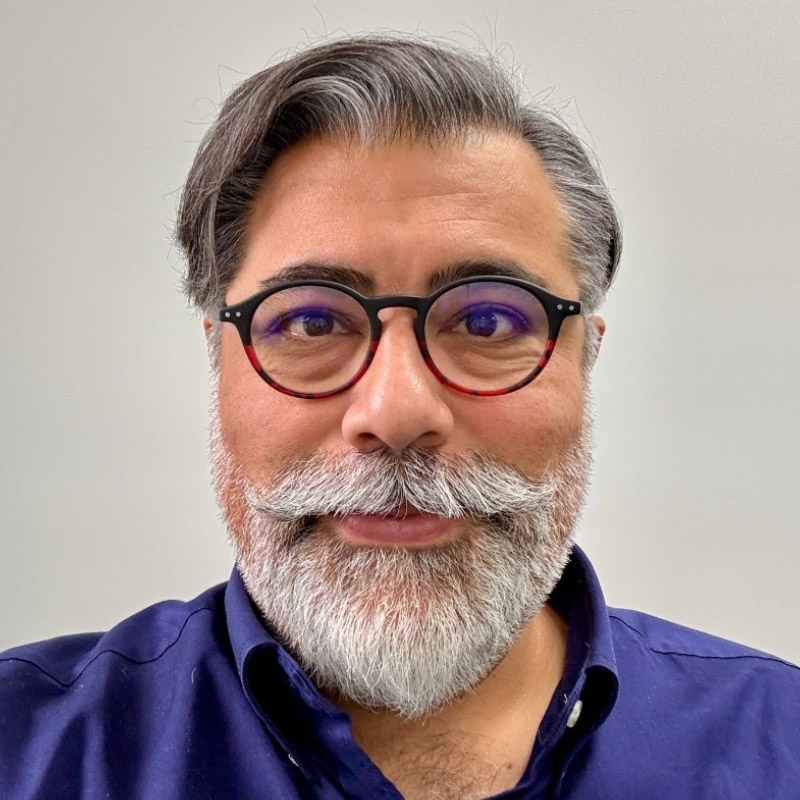
Retirement planner and mindset mentor George Jerjian joins Matt to explain why this happens, and what retirees can do to avoid it. After years of helping people navigate this transition, George has seen how easy it is to “drift into oblivion” once the paychecks stop and the identity fades. In this episode, he breaks down the hidden dangers of traditional retirement, why financial planning alone isn’t enough, and how his DARE Method helps people rediscover meaning, purpose, and joy in the second half of life.
If you enjoyed this episode of The Matt Feret Show, you may also enjoy:
Listen to the episode on Apple Podcasts, Spotify, Deezer, Podcast Addict, Stitcher, Google Podcasts, Amazon Music, Alexa Flash Briefing, iHeart, Acast or on your favorite podcast platform. You can watch the interview on YouTube here.
Brought to you by Prepare for Medicare – The Insider’s Guide book series. Sign up for the Prepare for Medicare Newsletter, an exclusive subscription-only newsletter that delivers the inside scoop to help you stay up-to-date with your Medicare insurance coverage, highlight Medicare news you can use, and reminders for important dates throughout the year. When you sign up, you’ll immediately gain access to seven FREE Medicare checklists.
“Of course it's important and we need it. But when the focus is overly on the money, we're missing a trick here. And the thing is, our lives are very important. We don't realize this until we have a rendezvous with death, which I had. And so when you have a rendezvous with death, you suddenly realize that time is crucial. In fact, I'd go as far as to say that every single day is a new life. It's a new beginning. Because we're not guaranteed to get up in the morning tomorrow. In fact, some of us may not make it to the end of the day.”
-George Jerjian
“I'm telling you, if you lie to yourself long enough, you believe the lie. And then the ego comes in. Now, here's the thing though. What nobody tells you is the minute you retire, your identity is compromised. So let me lay it out as to how this works.”
-George Jerjian
“Go to a country or a place that you've always wanted to go and explore. And you will see things about yourself and about your own life from a different perspective. And that changes how you see things and how you think. So coming back to your point, travel is really important, grandkids and family hugely important, but you can still do both now.”
-George Jerjian
Host’s Links:
All Things Medicare: prepareformedicare.com
Decoding Social Security: prepareforsocialsecurity.com
My Written Works on Amazon: www.amazon.com/stores/Matt-Feret/author/B09FM3L4WW
The Matt Feret Show YouTube: www.youtube.com/@themattferetshow
Network with me on LinkedIn: http://www.linkedin.com/in/mattferet
Follow me on X: twitter.com/feret_matt
See behind the scenes on Instagram: www.instagram.com/matt_feret/
Join our community on Facebook: www.facebook.com/themattferetshow/
Follow me on Instagram:Matt Feret (@matt_feret) • Instagram photos and videos
Guest Links:
Webpage: https://georgejerjian.com/
Linkedin: https://www.linkedin.com/in/georgejerjian/
Instagram: @georgejerjian
Youtube: @retirementrebellion
Matt Feret (00:00)
Hi everybody. Welcome to the show.
My guest today is George Jerjian. He’s a mindset mentor to retirees, and he also spends a lot of time helping people find a new beginning.
On top of that, he’s a three-time author on this very topic.
George, welcome to the show.
George Jerjian (00:21)
Great to be with you, Matt.
Matt Feret (00:23)
Tell everybody what you do. I mean, I just kind of told them, but in your own words, what you do, how long you’ve been doing it, and how you help people.
George Jerjian (00:32)
I help retirees find a new beginning.
And why is that the case? Because retirement is not what it’s supposed to be. It’s a dangerous place to be for retirees, particularly those who think that they’ve nailed it by having their financial plans all worked out tidily, because it’s not about the money.
It’s about your life.
And drifting into oblivion is a very dangerous thing to do when you’ve got another 25 years potentially ahead of you. And no one tells us this.
Matt Feret (01:16)
You know, it’s true. Everybody talks about 401(k)s and IRAs and pensions and Medicare and Social Security and the timing, and it’s all money-based.
Is it a gauntlet? I guess that is what you’re talking about.
Does that ring true for everyone regardless of whether or not they have two pennies to rub together or two billion pennies to rub together? Do people find themselves at the same point no matter how much they’ve got or don’t have?
George Jerjian (01:50)
That’s a tough question because the automatic thing is to say yes, but there are people who get on with their lives unknowingly.
In other words, they’ve got the right attitude. They realize that retirement isn’t what it was meant to be, and they enjoy doing what they do. By default, they get it right. They’re living their lives with meaning.
So don’t get me wrong, the money is important. It’s energy. Of course it’s important and we need it.
But when the focus is overly on the money, we’re missing a trick here.
And the thing is, our lives are very important. We don’t realize this until we have a rendezvous with death, which I had.
So when you have a rendezvous with death, you suddenly realize that time is crucial.
In fact, I’d go as far as to say that every single day is a new life. It’s a new beginning because we’re not guaranteed to get up tomorrow morning. In fact, some of us may not make it to the end of the day.
Statistically, though, most of us will.
And it’s what kind of life do you want to be leading?
Now, if you’re set financially, that’s kind of like a false sense of security because things can go wrong. And when things go wrong and you’ve been retired for 10 years, you can’t exactly go back into the workforce.
George Jerjian (03:37)
So you’re a dead man walking. It’s simple.
Recognize that whatever money you’ve put aside is good. You haven’t wasted your time. But recognize that whatever time you have left is precious.
What do you want to do with that time?
Who do you want to become?
Matt Feret (04:05)
Do you find people get there from a percentage standpoint?
Do people get their financial affairs in order and quote-unquote retire and then naturally move into this meaning and purpose and kind of the “now what?”
Versus the percentage of people that actually do the finances and then prepare to retire or prepare to do something more meaningful or purposeful in retirement.
What’s the split in your experience?
George Jerjian (04:41)
I think the split is the vast majority of people don’t know.
And they don’t know not because they’re stupid. They don’t know because they’ve got no idea what they’re walking into.
Retirement is a different country.
Who you are—or rather, who you were—is of no significance going forward. In other words, apart from you, nobody cares.
I mean, I’m being brutal, but to get to the point, all the certificates you have in your office at home, all the cups and things you’ve won—that’s history. That’s not who you are now.
You’ve been stripped of who you were.
And if you don’t make a cognitive decision, even a spiritual decision, as to who you want to be in this next chapter of your life—and by the way, this isn’t medicine, this is supposed to be the best part of our lives if only we believe it.
We know from Cicero that old age is the crown of life. It’s supposed to be the best part of our lives.
But unfortunately, in the culture that we live in, age means decrepitude. It means you’re a has-been. You’re over. Time out. Sayonara.
Matt Feret (06:19)
Yeah, it’s kind of the only “ism” that’s still allowed in Western society is ageism.
George Jerjian (06:23)
Absolutely. And it’s rampant.
And I catch myself doing it because that’s how we’ve been programmed.
So what we need above everything else is a mindset change.
And I’m going to quote Plato from 2,500 years ago. The guy either got a download or he was a genius.
He said:
“Reality is created by the mind. We can change our reality by changing our mind.”
But I’ll give you another quote.
Henry Ford said, “Thinking is the hardest thing to do. That’s why so few of us engage in it.”
Matt Feret (07:14)
Yep. We’ve got Henry Ford, Cicero, and Plato. This is a who’s who.
George Jerjian (07:17)
It is. These guys were telling us about what we’re facing.
And yet we’re too comfortable and complacent and we think we can ride this through.
I mean, our ego says, “Do you know who I am? Do you know what I have achieved?”
Nobody cares. Really, nobody cares.
And what we don’t realize is that our identity is compromised.
There are studies done on this.
There was a Harvard professor, Theresa Amabile, who talked about “identity bridging.”
What she meant by that was when you meet retired people at a drinks party or wherever, they’ll tell you they’re a retired lawyer or a retired CEO—or maybe even a retired janitor.
Matt Feret (08:16)
Because they’re still identifying with their prior title and/or accomplishments.
George Jerjian (08:24)
Yeah, because they know they’re nobodies now.
So they’re bridging to what they used to be.
Internally, you can see they’re identifying with this emptiness in their life.
And we humans were not meant to be empty.
So in retirement—and I was semi-retired for nine years, so I know.
Matt Feret (08:51)
Yeah, I was gonna say, you’ve gotta get to the “how did you get here” piece. We’re gonna get to that very soon, I hope.
George Jerjian (08:57)
Yeah, well, we could go anywhere with this talk.
Matt Feret (09:01)
Yeah, but how did you get here?
You mentioned it briefly in the beginning. You had a brush with death. So tell me the story.
George Jerjian (09:07)
I did.
First of all, I knew nothing about retirement.
At age 52, I was diagnosed with a bone tumor. And the oncologist said bone tumors are generally—in 98% of cases—secondary cancer, which means it’s spread throughout your body.
So he gave me six months.
Talk about a punch in the face.
And my reaction? I laughed it off. I said, “It’s not happening to me. It’s happening to him.”
Matt Feret (09:44)
You just disassociated yourself. Wow.
George Jerjian (09:45)
You disassociate.
We have ways of deluding ourselves. We’re very good at that.
So for about three and a half weeks while I was undergoing tests, I had this sword of Damocles hanging over my head.
The guy said 98%.
Three and a half weeks later, I discovered I belonged to the 2% club.
Mine was benign, localized, highly aggressive, required two operations. So my death sentence was commuted to six months recuperation and learning how to walk again.
So I took a philosophy class online, and I had a lot of time to think.
And I realized I was semi-retiring. I was shutting things down. I wanted to reassess my life.
Time was suddenly the really important factor in the equation here—not money.
And again, I repeat, money’s important. Don’t get me wrong. But money, there’s always a possibility of making more of it again. There’s no possibility of getting time back.
That’s the difference.
So you kind of have to balance the two.
And so I semi-retired. I got rid of anything in my life that wasn’t worth the hassle.
And I semi-retired for nine years.
I drifted slowly into oblivion.
I was unhappy, unfulfilled, waiting for other people.
George Jerjian (11:35)
It just got so miserable that after nine years, I decided I had to take action.
Matt Feret (11:38)
Yeah.
Hold on, break that down just for a second.
You were humming along in life. Age 52, cancer diagnosis, reassessment—right? Thank God you’re here. It was benign. Well, it was aggressive, so it wasn’t benign, but you got it solved. You’re in the lucky 2%.
Now, I would imagine some people listening or watching would say, “New lease on life,” and you would appreciate every day you woke up, right? The old saying: nobody should ever wake up on the wrong side of the bed. You woke up. Some people didn’t. It’s automatically a good day.
So why is it that you semi-retired—in other words, you put time before money or some semblance of that—but then drifted?
I’ll use the word depression. You didn’t. But why did you drift for nine years?
Or was it that you wanted to find meaning? If time was so important and you realized that after getting cancer at age 52, why do you think you drifted for nine years? What were you trying to figure out?
George Jerjian (12:47)
Okay.
I didn’t know that you could reinvent yourself.
I was in a box of “52, early retirement.” What do you do? Everybody retires and this is what happens.
I’m no genius. I just followed. I did what I thought was the right thing.
It’s only when my pain of irrelevance, my pain of being unfulfilled, of having no joy in my life, of having no reason to jump out of bed…
Although paradoxically, I knew that every day I was living on bonus time.
I’d just been given a new lease on life, so I knew every day mattered.
But at the same time, I didn’t have the capacity or the knowledge to break free out of the imprisonment of this diktat that after a certain age, you’re now into the retirement phase.
I just happened to get there earlier.
And what do you do?
Listen, I’m no genius. I’m a slow learner.
It took me a while to wake up. And I would say it wasn’t even intelligence—it was misery that got me to say:
“I need to tear up this rule book. I need to do something different. I need to find out what I’m supposed to be doing with my life.”
And that’s where I got involved in finding this retreat—a spiritual retreat—a 30-day silent retreat to go deep within because I knew the answer did not lie outside of me.
It was within, as it is for all of us and each of us.
So to your audience, I would say: don’t look for the answer outside of you.
There’s no genius out there who’s going to tell you how to lead your life.
Only you have the answer.
George Jerjian (14:59)
If you can spend the time to drill down and excavate under the crap that we’ve built up over our lives and the lies that we tell ourselves just to get on.
So it’s about finding not just your purpose, but finding your higher self—who you are and who you want to be before the lights go out.
Matt Feret (15:31)
So when you went through nine years of…
George Jerjian (15:35)
Semi-retirement.
Matt Feret (15:37)
Semi-retirement, but knowing that you needed to do some work—or maybe not knowing you needed to do some work but then coming to that conclusion—what was your aha moment?
What was the moment before you went on a 30-day…
What was it called? I can’t imagine not talking for 30 days, much less 30 minutes. You’ll have to tell us how that went.
But that seems like an extreme.
You must have gotten to a point where you were like, “I think I’ve got it, but I really know I need some help, and this is one of the answers I’ve got.”
What was your moment of realization that made you go, “I have to go do something”?
Maybe for some people it’s a 30-day retreat, maybe for others it’s different.
What was that point where your brain went, “Man, I’ve gotta get this solved”?
George Jerjian (16:50)
I think there’s one word:
Despair.
When you reach the point of despair, you know the remedy is something that’s going to demand a great deal out of you.
I was brought up Catholic, went to Catholic school, and at some point in my growing up, I even wanted to be a priest until I realized I liked girls too much and sex was going to feature very highly in my life, so that wasn’t going to work.
But there was a part of me that wanted some strong spirituality. I needed some spiritual anchor.
And I wanted to go deep inside.
I’d always heard about this 30-day silent retreat, but I thought, “Nah, I like talking too much. This isn’t gonna work.”
But there was a part of me that wanted that challenge.
I needed a breakthrough, and I wasn’t going to get it by going to fortnightly or weekly therapy sessions. It had to be something deep.
And I knew nobody out there was going to tell me what I needed to do. Only I could find that out.
But I had to go on what I call an inside adventure—or an “inventure.”
But despair was what drove me to that.
Matt Feret (18:33)
It’s interesting because if anybody listening or watching is not yet retired or semi-retired…
I don’t know. Despair is a sad word.
If you’re looking from the outside in, if you have the financial means to retire or semi-retire at age 52, that’s—the whole FIRE movement, right? Financial Independence, Retire Early, has been pushing for 15 years to do just that.
Earn enough, save 80% of your paycheck, and then get out of the rat race early.
And what you’re saying is you went into this and you were in despair—not the bliss that I think everybody dreams of when they think of retiring before 65 or 70.
Do you think that’s more common or less common?
George Jerjian (19:26)
I think it’s much more common than people will admit.
Don’t forget, to actually admit that your retirement sucks is a huge leap.
Matt Feret (19:42)
Yeah, because everybody else who’s still working is looking at you with jealousy and can’t wait to get there.
But you’re saying, “Just one more year,” or “Just a couple more thousand bucks in the retirement plan…”
George Jerjian (19:53)
I’m telling you, if you lie to yourself long enough, you believe the lie.
And then the ego comes in.
Now here’s the thing nobody tells you: the minute you retire, your identity is compromised.
So let me lay out how this works.
As soon as your identity is compromised, it’s not just your friends who turn or don’t give you as much time as before.
Your own family. Your own partner.
Why?
Not because they’re bad people, but because now you’ve chosen to be a nobody.
And at home, you think, “Well, I’ve paid the mortgage here for the last 30 years. I think I have a say.”
Really? No, you don’t.
Your partner has a say.
Suddenly now, you think you can fix things in the house. That’s not gonna work. Trust me, it’s not gonna work.
Matt Feret (21:05)
Why is that?
Is it because not only do you self-identify with your work, your job, your title, your paycheck, the business that you started—but you’re saying your friends and your partners do too?
And so when that changes, they look at you through a different lens.
George Jerjian (21:24)
Yes, but it’s not just that.
It’s that you’re now a nobody walking around and interfering in other people’s lives.
I mean, let’s be honest.
Listen, if you’re not busy doing something creative, if you’re not socially and mentally engaged, you’re drifting into oblivion.
Literally, your mind starts to disengage.
You don’t have anything interesting to contribute to friends.
And in your own family, you’re getting in the way.
Before, they’d see you for a couple of hours a day, maybe the weekend.
Now they see you 24/7? Shoot me.
That’s the ugly reality of retirement.
So it’s not about blame. It’s about everybody needing to do something worthwhile and meaningful.
And in a sense, life is challenging retirees to say:
“Who am I going to be now?”
So it’s about a new identity.
And what service can I be?
Without comparing who you were before and your paycheck.
Because whatever you’re going to do now—and I’m not saying you can’t make more money because it’s not about making, it’s about being.
Who are you going to be in this next chapter of your life?
And to do that, you need to go on an inward journey.
Now, I’m not saying you have to do a 30-day silent retreat. I’ll spare you that.
Matt Feret (23:24)
I still don’t think I could do it even if I needed it, so thank goodness.
But where do you start?
And when do you start?
I assume you’re going to say start before you retire.
But in your instance, you had cancer and you almost died. It was forced upon you in some sense of the word.
So is the best time to start quote-unquote now? Or years ahead? Months ahead?
Or give yourself six months after you retire and then go on this journey?
George Jerjian (23:58)
I would say there are many ways you can do this, but there’s no harm in starting early because it takes time to make that transition.
Remember, it’s about finding who you want to be in the next chapter.
This isn’t something you instantly solve.
Some people are very fortunate and they find it quickly.
Others need to do some work, as I did, to find out who they want to be and what they want to do.
And I really love what I do.
I never thought teaching would become one of my passions.
I’m a marketing guy. I was in commercial real estate. I funded litigation. I did all sorts of things.
But teaching—this is where I think I’ve come into my own.
I love doing this stuff. I love learning, and I love teaching.
I’m fully engaged mentally and socially.
And I’m helping people.
Matt Feret (25:17)
It seems like—and helping people obviously is what I love too, and I know that—but this seems hard to me.
Maybe I’m personalizing it, but it’s my show, so I can do it.
That would be hard for me.
The easy part for me would be talking about the money. Do I have the appropriate mix of stocks and bonds in my retirement accounts? Is my car over 100,000 miles?
Those things are easy for me.
I think the hard piece is going to be when that day comes—or even starting before that day comes—is doing that self-discovery and introspection.
So for a guy like me, how do you coach people to become comfortable with even broaching that topic?
Because it’s scary.
George Jerjian (26:07)
It is scary.
But listen, I’ll tell you what’s scarier: having to address this on your deathbed because it’s kind of too late then.
So you have a choice.
You can just drift into oblivion and have to face that question on your deathbed like, “Shit, I didn’t live the life I wanted to live.”
Sorry, time’s up. Brad Pitt’s outside. He’s taking you away.
Matt Feret (26:39)
Yeah, that’s not something I would want to do.
George Jerjian (26:40)
No, nobody does.
And so while you’re still in a strong position, recognize that you need to be investing in yourself because that’s what this is.
And I have a very easy process which I’ve put together—not just from my own experience, but also from learning how other people have done it in the past.
It’s called the DARE Method.
Matt Feret (27:17)
Please. I do.
George Jerjian (27:39)
Conceptually, “dare” is another word for courage.
And courage comes from the Latin “cor,” meaning heart.
Now why is this important?
Because we need courage to un-retire and find a new beginning.
It’s so much easier to be complacent and just go with the flow and let things end where they’re going to end.
But with 25 years to go, you need to rethink this equation.
And courage is not an intellectual faculty. It’s an emotional faculty. It’s a heart decision.
That’s something we’re not used to in our culture. Everything’s got to be logical.
But even Einstein said, “The intuitive mind is the master and the rational mind is its servant.”
Yet we live in a society that worships the rational mind and ignores the intuitive.
So what I’m saying is the answer lies within each of us, in our own hearts. That’s the journey we need to go on.
Now it’s a very short distance between the intellectual mind and the emotional mind. It’s less than eight inches, but it’s like 8,000 miles because it’s a very circuitous route.
We have minefields that stop us from going to places we don’t want to go.
One of the questions I ask people is:
“What are you most afraid of?”
Because for a lot of people, the answer they want is right behind that fear.
Matt Feret (29:23)
What kind of answers do you normally get?
Failure? Running out of money? What do you get?
George Jerjian (29:23)
And that takes courage.
No. It’s usually something from when they were younger.
They wanted to do something, and the whole idea was demolished in their heads by the people who cared for them most.
“You’ve got to make a living, kid.”
That’s one aspect.
Matt Feret (29:43)
“I wanna sing!”
George Jerjian (29:57)
Exactly.
So you need to revisit that.
And for that, there are exercises I have that help people do an audit on their life, which was part of what the spiritual retreat was all about.
I’ve brought some of those exercises into this process.
So DARE is also an acronym:
Discover
Assimilate
Rewire
Expand
Matt Feret (30:03)
Okay.
George Jerjian (30:25)
The “Discover” phase is about discovering what retirement is and what it’s not.
The “Assimilate” phase is about assimilating new information about how our mind works, particularly our subconscious mind, which works very differently from the conscious mind.
We don’t have time to go into all of it, but essentially once you understand how your mind actually works, it changes the entire way you look at things.
The next word, “Rewire,” is about how to rewire your mind.
How do you rewire the inner dialogue that’s always running in the background?
“You’re too old to start.”
“You can’t take risks now.”
“You don’t have enough.”
All the fear starts playing.
Well, you need to change that inner dialogue because it’s not real. It’s programmed.
And we’re making decisions based on that programming.
That’s what Henry Ford meant when he said thinking is the hardest thing to do.
We don’t want to go there.
Actually, it’s emotions. It’s not even the mind.
The thoughts—the fear thoughts—are emotions being replayed.
So you have to record over them like a tape recorder back in the day. You could record over the tape, right?
That’s essentially what you’re doing with rewiring.
And lastly: “Expand.”
Expand because it’s counterintuitive.
In retirement, we don’t expand. We shrink.
We shrink everything—costs, homes, assets. Cut, cut, cut. Our sandbox gets smaller and smaller, and then we wonder why we’re drifting into oblivion.
It’s counterintuitive. We need to expand.
Matt Feret (32:07)
Mm-hmm.
George Jerjian (32:19)
One of the ways you expand—and it’s very powerful from a neuroscientific standpoint—is gratitude.
When you’re grateful for what you already have, it allows you to open up to bringing in bigger things and new things into your life.
Richer things.
And by richer, I don’t necessarily mean monetarily.
I’m talking about richer things in terms of the service you provide, the fulfillment you get, the friendships you create.
There are so many things that play into this.
I’ve even studied the German philosopher Martin Heidegger, who said that thinking and thanking are not just linguistically connected—they come from the same proto-German root—but they’re neurologically connected.
When you’re thankful, it opens up so many doors for you because people love grateful people.
Nobody likes people who are discontented all the time and miserable.
So that’s the DARE Method in essence.
Matt Feret (33:54)
Right.
Yeah, and I want you to walk me through it if you don’t mind.
Obviously we don’t have time for you to take me through an entire session, but maybe just give a preview.
Use me as your subject. I’m your willing subject.
Take me through just a quick preview of D-A-R-E.
George Jerjian (38:10)
Okay.
The DARE Method is broken into eight modules—two for each of those letters.
In the first one, “Discover,” I give you a history of retirement.
And it’s important to know the history because otherwise you’re living in a vacuum. You don’t know where you’re coming from or where you’re going.
If you understand who created retirement and why they created it…
I go back to Caesar Augustus. He created retirement for the Imperial Roman Army to make sure nobody assassinated him like they assassinated his uncle, Julius Caesar.
And he got their loyalty because they were all looked after in retirement.
He put 600,000 sesterces of his own family money into it, which was a huge amount of money.
It grew into an incredible fund—so much so that within the lives of two Caesars, the Roman Senate kept taking money out of it.
Not dissimilar to how the U.S. government has taken money out of Social Security over the decades.
There’s nothing new under the sun.
My point is that retirement, when you understand the history of it, makes you realize it’s a house of cards.
The money is important, but don’t put too much reliance on it because things can go south.
You’ve seen valuations in pension funds go up and down.
And with the economic situation now—and I’m not going to get political—things can go south very quickly.
So yes, money is important, but it’s not your life.
The history is important because it clears away the foggy illusions you may have about how other people are going to look after you.
No, they’re not.
You need to look after yourself.
Matt Feret (41:44)
Mm-hmm.
And now pension funds are unfunded.
George Jerjian (42:07)
Exactly.
But in a good way—not a negative way.
So that’s “D.”
And there are exercises with each of these eight modules.
The first ones involve doing an audit on your life.
That’s hugely important because I did an audit on my life and chose to look at the houses I’d lived in and all the good things that happened in those houses—and all the not-so-good things.
And when I was in that silent retreat, I had time to evaluate because I was completely cut off from the world.
I was focused on my journey.
And what I discovered was that none of the good things would have happened in my life without the preceding crises.
So I wrote a book called Spirit of Gratitude: Crises Are Opportunities.
Why is that important?
Because we need to be grateful for the bad things that happened in our lives because they opened us up to new opportunities.
And retirement is a crisis in the true sense of the word. It’s a turning point. It’s a pivot.
For most of us, we hate the idea.
That’s why people don’t want to retire if they can help it.
But it’s something you have to go through.
And there are a lot of benefits.
So my spirit of gratitude journey was really about being grateful for the challenge retirement presents.
You don’t want to go kicking and screaming into this phase.
You want to recognize that it’s going to be arduous and challenging—but in a good way.
You’re going to grow through this instead of staying where you are because it’s comfortable.
Matt Feret (44:35)
Yeah, we—I was gonna say, try to equate this.
Is there another time in people’s lives that you can equate this to?
I mean, think about what many people have already been through by this stage: marriage, divorce, remarriage, children, death, sickness, new careers, new jobs, big promotions, getting fired.
There’s a lot by this stage that you’ve already gone through.
George Jerjian (45:02)
That’s exactly my point, Matt.
We’ve already been through many of these iterations.
And each time, in the moment, it feels like a bad outcome. But a few years later, you look back and realize it was the best thing that could have happened because you wouldn’t have found the new thing you’re into now, the thing you love.
My point is that retirement is a rite of passage—probably more crucial than the in-between stuff.
When we’re younger, some people take a gap year.
Matt Feret (45:49)
I didn’t either, but it sounded great.
George Jerjian (46:02)
Exactly. And I think the young people who take gap years develop much more quickly because they gain a new perspective on life—not just life outside themselves, but their own inner feelings about things.
It opens them up because it’s a rite of passage.
Whereas in old age, when you stop work, we have no rite of passage in our culture.
And in a sense, I introduce this “gap year” for elders because it’s a way of integrating the closure to the working life that you had before.
But it’s not the end.
It’s a new chapter that’s going to take you through the next 25 years.
Don’t you want to invest in yourself to prepare for this next stage you’re going into?
It’s daunting to do it on your own, but when you’ve got somebody holding your hand and helping you make that move, it’s so much easier.
Matt Feret (47:05)
I love that. A gap year. A gap year in retirement.
Think of all the things you could do.
You don’t even have to…
Now my brain’s going a little crazy with this.
If I just had a gap year between work and retirement where I didn’t feel like I had the responsibility to immediately be productive or immediately do something new or immediately start volunteering or immediately start seeing my kids more—but I’ve got a year to figure it out…
Just giving myself, or having someone give me permission, to take a year. A gap year.
George Jerjian (47:42)
But here’s the thing.
First of all, it doesn’t have to be a whole year.
Matt Feret (47:43)
I love that.
Okay, I mean, I want a whole year, but I get what you’re saying.
George Jerjian (47:59)
What I’m trying to say is we all have older parents we need to look after, but these things are negotiable.
Don’t use other people as an excuse not to take responsibility for your own life going forward.
Matt Feret (48:15)
It’s so easy to do, George.
You just said that.
If you’ve got parents you’ve got to take care of or grandkids that need you, there are so many ways to not do this and distract yourself.
George Jerjian (48:18)
We all do it.
Absolutely.
And be aware: these are excuses we make to ourselves.
Before I went on my 80-days-around-the-world trip, I had a 90-plus-year-old mother with full-onset dementia.
And I was nervous about going because if she died, I’d have to cut my trip short. Things could go wrong.
I went. I came back. She was still here.
Matt Feret (48:56)
You were worried you wouldn’t be there in her last moments.
George Jerjian (49:09)
Exactly.
Could it have gone otherwise? Yes.
But what I’m saying is that we place such little value on our own lives by making excuses.
And the excuse sounds reasonable, so we believe it.
But your life is incredibly valuable.
And if you want to use the Christian adage—
Matt Feret (49:46)
“Love your neighbor as yourself.”
George Jerjian (49:46)
Thank you. That’s the one I was looking for.
I actually turn that on its head.
How can you love your neighbor if you don’t love yourself first?
It’s an equation.
It doesn’t say, “Love your neighbor, period.” It says, “Love your neighbor as yourself.”
But I think our consumer society and advertising make us discontented with what we have so that we’ll go buy whatever it is they want to sell us.
It’s like a slow drip-feed of poison.
We always feel inadequate. We don’t feel worthy.
Think about it.
That’s why we don’t love ourselves.
“I’m not handsome enough.”
“I’m not good-looking enough.”
“Is my bum too big?”
Matt Feret (50:44)
Do I have the right education? Am I smart enough? Do I have enough money?
Yeah, there’s plenty of that.
George Jerjian (50:47)
Exactly.
There are so many reasons why we don’t love ourselves.
And if we’re in that emotional state, we can’t genuinely love our neighbor.
So if you actually want to lead a good life—a Christian life or whatever path you follow—you need to love yourself first.
That’s a prerequisite.
Matt Feret (51:23)
And what you’re equating that to is allowing yourself that gap year.
Allowing yourself—because you deserve it—and loving yourself enough to give yourself that time away from everyone and everything.
I mean, heck, you went to a silent retreat.
You literally went away and didn’t talk for 30 days.
But allowing yourself to do that—to love yourself enough to do that—that’s an interesting way of thinking about it.
George Jerjian (52:06)
I’d add something else to this.
If we don’t take that gap year immediately after retirement and postpone it, you’ll never do it.
Something’s going to come up and you won’t do it from that point on.
I was 69 when I did my trip. I was able to get insurance to do my around-the-world trip.
If I had waited one more year, at age 70 I would not have been insurable for traveling around the world.
Matt Feret (52:20)
No kidding.
George Jerjian (52:49)
I could’ve gone to one destination and come back and then gone out again, but not around the world.
The chances of me falling, breaking something, needing to be shipped back—it all changes.
So what I’m saying is don’t think you have all the time in the world to do the things you really want to do.
This is the time to do it.
And it’s perfectly timed because it’s going to give you answers to everything you want to be thinking about and doing for the next 25 years—or whatever time you have left on this planet.
Matt Feret (53:29)
That’s a really important point that I think a lot of people miss.
There are ages and stages for activities that will sunset.
I have a friend who has done a wonderful job of living life. He moved where he wanted to move, lived where he wanted to live, and then just found a job.
The guy is incredibly talented—multiple degrees.
And he said to me once, “You can work in a wheelchair.”
I mean, I guess you can go sit at Walmart or sit at the hardware store in a wheelchair and make money.
But you’re going to age out of certain things.
You’re not going to hike the Appalachian Trail when you’re 70.
So if that’s what you want to do—hike the Appalachian Trail or do a grand tour of the world—there’s a limited amount of time to do it.
And if you don’t think about what you want to do and your purpose, it will pass you by.
You’ll wake up at 70 and realize, “Yeah, I physically can’t do this anymore.”
George Jerjian (54:53)
Or your kids won’t let you.
There are all sorts of possibilities.
I’d like to finish with one thing about why travel is so important.
And as I said, you don’t have to go around the world. You can choose one place, and you don’t even have to leave your own country.
Choose somewhere you’ve always wanted to go and explore.
The quote I have is from Paulo Coelho, who wrote The Alchemist.
Matt Feret (54:55)
Yes, please.
I remember the title, not the author.
George Jerjian (55:24)
The Alchemist is about a guy who goes on a journey, comes back transformed, and sees his own hometown differently.
Paulo Coelho has this beautiful quote that really summarizes my journey:
“Maybe the journey is not about becoming anything. Maybe it’s about unbecoming everything that isn’t really you, so that you can become who you were meant to be in the first place.”
Matt Feret (56:06)
Well, thank you for sharing that. That hit me pretty hard.
That’s a great quote.
George Jerjian (56:13)
That quote hit me too.
And that’s one of the reasons I did what I did—traveling around the world in 80 days.
I read the Jules Verne book as a kid and fell in love with it. I wanted to do that, but life got in the way.
So I was fortunate enough to finally have the chance to do it as my own gap year.
Matt Feret (56:29)
Yeah.
Gap year. The DARE Method.
How do we find you on the internet or in this world?
You mentioned your website and some free resources there.
Tell me how people can find you and your books.
George Jerjian (56:57)
Okay.
My website is georgejerjian.com.
My social media is either George Jerjian or Retirement Rebellion.
You’ll be able to access Instagram, YouTube, LinkedIn, Twitter—everything is there.
And there’s a free course there so you can get a taste of what you can learn from this next stage in life, which I hope will help you.
Matt Feret (57:41)
And I’ll have all those links on the show page and in the show notes as well, just in case anybody forgets.
Tell me what types of courses you have, how many there are, and just give me a quick preview if you don’t mind.
George Jerjian (57:44)
Thanks, Matt. Appreciate it.
I have my free taster course, which is one hour long.
Then I have a prerecorded digital course that runs for eight weeks. It’s drip-fed each week with exercises, and it’s all prerecorded.
I think it’s about $298.
Then there’s the live eight-week course with me—90 minutes each week for eight weeks—which is just under $3,000.
And lastly, it’s not available yet, but next year I’m hoping to do a retreat: a one-week retreat with 12 people, very intimate, in the UK initially.
Then we may choose different locations each year. We’ll see how it goes.
Matt Feret (58:35)
Good luck with that.
I have to think there are more than 12 people interested in that.
George, this has been a real pleasure, and I’m going to stop this recording and have a little bit to think about myself.
I really appreciate the time you spent with me.
George Jerjian (59:07)
My pleasure, Matt. It’s been fun for me.
Thank you.
Matt Feret (59:10)
Thank you.
All right now.