
For most retirees, the house they live in is also their biggest untapped asset. Home equity often sits quietly on paper, doing nothing while retirement savings shrink and costs rise. Yet that same equity can be converted into income and peace of mind — WITHOUT selling the home.
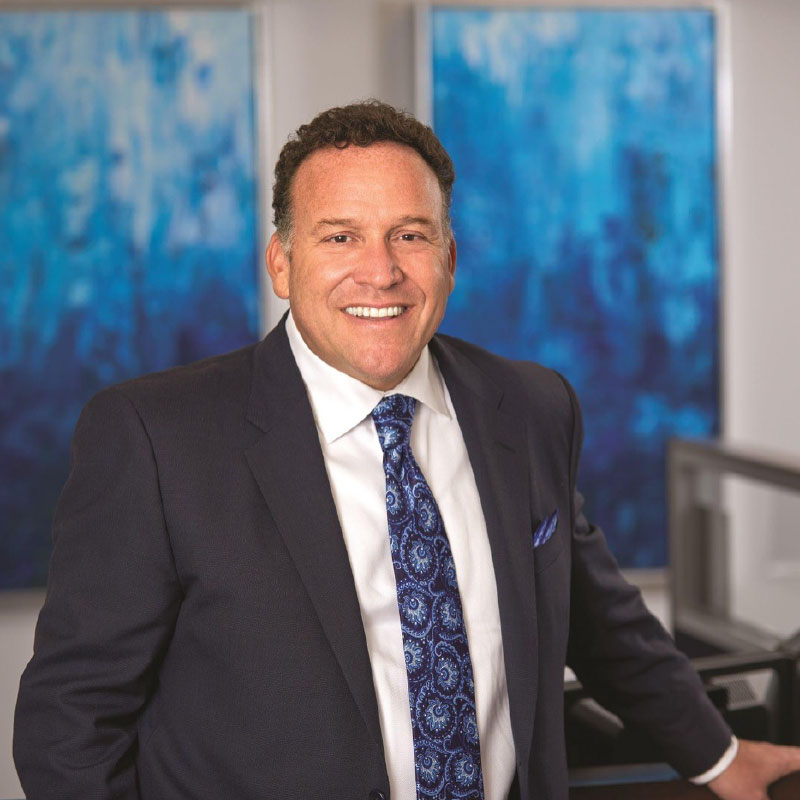
In this episode, I sit down with retirement expert Matt Helton to unpack how home equity could be the key to a better retirement. Matt has helped countless retirees turn their homes into reliable, flexible financial tools — not through risky loans or sales, but through smart planning and modern FHA-backed programs designed to protect homeowners. He explains how these options work, the most common mistakes retirees make, and why fear and misinformation still keep so many people from taking advantage of what’s right in front of them. I learned a lot in this interview, and I think you will too!
Listen to the episode on Apple Podcasts, Spotify, Deezer, Podcast Addict, Stitcher, Google Podcasts, Amazon Music, Alexa Flash Briefing, iHeart, Acast or on your favorite podcast platform. You can watch the interview on YouTube here.
Brought to you by Prepare for Medicare – The Insider’s Guide book series. Sign up for the Prepare for Medicare Newsletter, an exclusive subscription-only newsletter that delivers the inside scoop to help you stay up-to-date with your Medicare insurance coverage, highlight Medicare news you can use, and reminders for important dates throughout the year. When you sign up, you’ll immediately gain access to seven FREE Medicare checklists.
“We have an epidemic where people are slipping, falling, getting dementia, all kinds of stuff. And let's just say that you end up in the hospital, because you're the one that pays the bills, right? So they say, oh yeah, I take care of my own bills. So you end up in the hospital for three months. You wake up in 90 or 120 days, and you hadn't made a single payment. And you haven't been able to tell anybody because you were out of it. What do you think about the lender, your favorite bank, what do you think may have happened or done to your house in the last 90 or 120 days?”
Matt Helton: “This is literally a mortgage on your home like everyone's had their whole life. Just a regular mortgage so the client still owns their house. They can still sell their house. They can still pass it on to their kids. There's no difference. The only real difference is instead of having to make a payment they have an optional payment, but that's the biggest misconception. They think that the bank is like buying their house out. No different. All the equity is still there. So a lot of people, what they'll do is because of that, they'll get some equity now because we can only lend low percentages. They may live in their home for 10 years. They'll still have equity. And then they sell their home and use the other part of the equity to move into an assisted living. So it's kind of a strategy. It buys some time because if you have that money, you can have in-home care come and help you.”
Host’s Links:
All Things Medicare: prepareformedicare.com
Decoding Social Security: prepareforsocialsecurity.com
My Written Works on Amazon: www.amazon.com/stores/Matt-Feret/author/B09FM3L4WW
The Matt Feret Show YouTube: www.youtube.com/@themattferetshow
Network with me on LinkedIn: http://www.linkedin.com/in/mattferet
Follow me on X: twitter.com/feret_matt
See behind the scenes on Instagram: www.instagram.com/matt_feret/
Join our community on Facebook: www.facebook.com/themattferetshow/
Follow me on Instagram:Matt Feret (@matt_feret) • Instagram photos and videos
Guest Links:
Podcast youtube: https://www.youtube.com/@servingseniorspodcast
Matt Feret (02:26)
All right, today on the show, I’ve got somebody who spends a lot of his time helping people get the most out of retirement—not just Medicare, Social Security, or 401(k)s, but one of the biggest assets most Americans have: their homes. This year, the Federal Reserve reported U.S. home equity had reached a record high of—are you ready for this?—$35.8 trillion dollars. That’s trillion with a T.
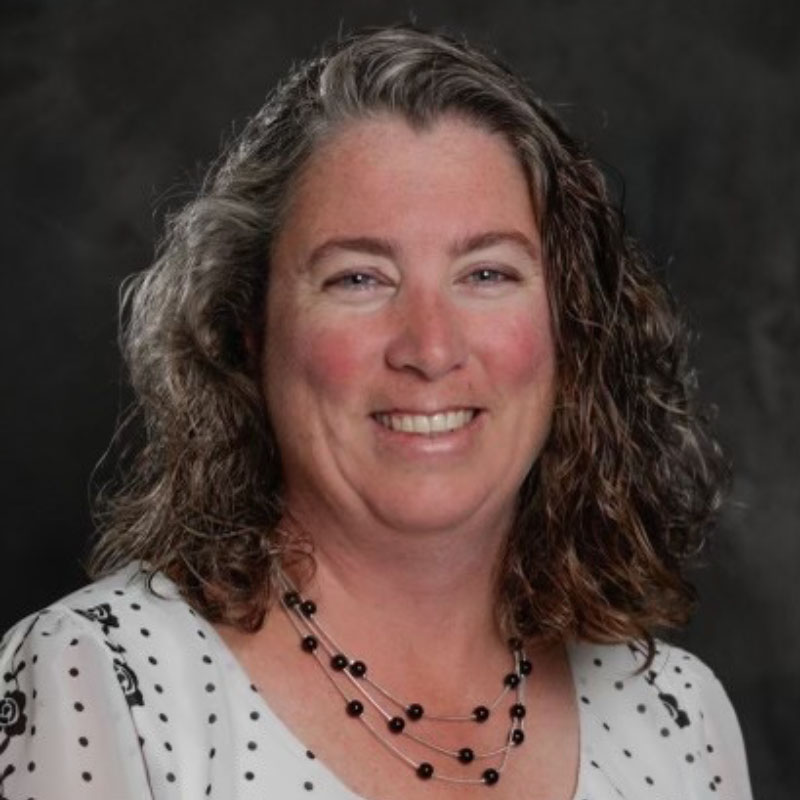
The average coming in at just over $300,000 per homeowner. My guest is Matt Helton. He’s passionate about helping people create financially stable retirements, but he specializes in showing them how home equity can be used very strategically to improve retirement security. He also hosts the Serving Seniors podcast on YouTube, where he shares ideas, resources, and conversations focused on making life in retirement better.
So in this episode, we’re going to talk about how home equity fits into retirement planning, the myths around reverse mortgages, what families and caregivers should know before making housing decisions later in life, and some of the biggest mistakes he’s ever seen people make.
So with that, Matt, welcome to the show.
Matt Helton (03:46)
Thank you for having me. Thank you for that awesome introduction. I don’t even know who you were talking about there.
Matt Feret (03:50)
And nice first name, by the way.
Matt Helton (03:54)
Yeah, thank you. And I’m assuming you know what it means?
Matt Feret (03:57)
What, Matt? I don’t. You’re gonna have to tell me.
Matt Helton (03:59)
Yes.
Okay, well, this could be an urban legend. It’s what my mom told me when I’d fall down and skin my knees. She said it means “gift from God.” So I think she would usually say that when I was being a demon from you-know-where, I guess she’d call me “gift from God.” But I’ll get back to you to see if that’s really true or not.
Matt Feret (04:11)
Really?
I think you’re…
Yeah, do that. I don’t think my mom ever once told me—or definitely didn’t think growing up—that I was a gift from God. But now I’ve got a little bit of ammo at Thanksgiving. Thanks.
So tell everybody what you do, how long you’ve been doing it, and how you help people.
Matt Helton (04:25)
Hahaha.
Yeah, yeah, thanks again. So my name is Matt. We actually live in the middle Tennessee area. And what we do is we actually show folks from early retirement on how they can strategically use some of their home equity to, say, not just survive, not just get by, but thrive in retirement.
So we show them how to strategically, ethically, and efficiently use their home equity to have better retirements. You probably see this all the time. We’ll see folks that have, you know, $200,000, $300,000, $400,000, $500,000 net worths. Then we’ll talk to them and they say, “Yeah, we’re just struggling.” I’m like, “Well, what are you talking about? You’ve got hundreds of thousands of dollars on your balance sheet.” And it’s, “No, what do you mean?” And they won’t even get it.
Then come to find out that it’s buried in their backyard, illiquid, in the form called home equity. But it really just means a large number that you can’t do anything with.
So we just show them how they can use that in an ethical, efficient, and safe manner as well.
Matt Feret (05:36)
What first got you into this?
Matt Helton (05:39)
Yeah, so I started helping people buy homes in the fall of 2006. Coming up on 20 years. And it was fantastic to help people actually get the keys to a home and help them build the future, etc.
Then we just started to see over time there was way more to utilizing your home and utilizing housing wealth than just getting a home. Once you get it, what do you do with it?
You work your whole life to try to pay it off or build equity, and then there’s all these folks that are just being scared into thinking it’s not something they can use. So we’d see people all the time that would have these large amounts of equity, and then they wouldn’t be having the type of retirement they worked for 40 years to try to figure out.
Maybe, “Could we go out to eat twice this month, or maybe just once?” It just didn’t make sense, right?
So we figured there’s gotta be a better way to retire and made it our mission to teach people that there is a better way—and a safe way to do it as well.
Matt Feret (06:47)
And it sounds like you’re saying what I think a lot of people feel, that they don’t really—not everybody thinks about their home as part of their retirement plan.
And I’ve got to guess it’s because they’re proud that they’ve paid it off and they don’t want a monthly payment because retirement is largely about cash flow. So they think, “Well, if I sell it, then I gotta find something else, and boy, have prices really gone up.” Or, “If I tap into it, then I’m gonna have to start paying a monthly mortgage again, and I just spent 15 or 30 years paying that thing off. And now it’s gonna be back on my brain that every month I’ve gotta come up with this payment. And what if something happens?”
Why, with all that kind of background—and I’m sure you’ve heard a million more stories—why should retirees, early retirees, or anybody, I guess, think about their house as part of their retirement plan?
Matt Helton (07:43)
Sure. No, that’s a good question.
I kind of give this story to people a lot of times where, Matt, have you ever met someone and you’re having a side conversation and you’re talking about a couple down the street? The couple had been retired for a few years and they’re traveling, they’re doing things, and they kind of look around to see if anybody’s listening.
“You wouldn’t believe about John and Sally.”
“What do you mean? What’s going on?”
“They saved in their 401(k) for 40 or 50 years and you wouldn’t believe what they’re doing now, Matt.”
“What do you mean? What are they doing?”
“They’re pulling money out of that 401(k) every month and going on trips. And they’re even spoiling their grandkids with their money. Can you believe they would do such a thing?”
Now, have you ever heard a crazy story like that? No one would ever say that, right? Because that’s why they saved all those years. They saved, they put it all together, and now they’re enjoying it.
Now, do you think someone may worry, if they’re thinking about tapping into their home equity, that someone may say, “Oh my gosh, I can’t believe it. I just can’t believe they’re pulling from their home equity”?
Whether they would say that or not, people almost feel like there’s a scarlet letter when it comes to touching equity in their home.
So I just let people know, your 401(k) maybe never happened, right? I kind of equate this to what I call second chances. It’s the second chance at the 401(k) that you were going to start every month but never got around to. It’s the second chance at that IRA that you were going to put away but never did. And it’s a second chance at that long-term care policy that you were always going to start, but it was always too expensive and you were going to start it next year.
Right? So maybe you never got around to it. But you know what you did do? You bought a house. And instead of paying a premium, you made a payment. Instead of the stock market going up, the real estate market appreciated.
You’ve got a 401(k) or you’ve got a long-term care policy—it just has a different name. And just so you know, there’s no scarlet letter with using some of this investment. It’s just like a 401(k). It’s just like a long-term care policy. You just happen to live there.
Because, by the way, if you use some of it, it’s the same house. You still live there. You still own it.
And also, too, if anything happens to you, you can still give your house to your kids. It’d be just like if you used half your 401(k) and you passed away—the kids get the other half. If you use half your equity to live off of and you pass away, the kids still get the rest of the equity.
It’s literally no different, but it just needs to be educated. And that’s what our mission is—to teach people how it works.
Matt Feret (10:38)
If you let me put it in a different way—and disagree with me if it’s wrong—your 401(k) is an asset, right? So if it has a positive balance, that’s an asset. Your house and the equity in it is an asset. It’s just, to your point, maybe there’s a scarlet letter around utilizing that asset because it’s somehow… you know, “What if the market collapses like in ‘08 and ‘09?”
My amateurish knowledge about this comes up with two phrases. One is HELOC, and the other is reverse mortgage. So what strategies do you—or are there more—what strategies do you deploy or talk about when you’re talking about this topic?
Matt Helton (11:29)
Sure. Yeah, there’s really three.
There would be the HELOC. There would be the traditional forward mortgage, which would be the 30-year or 15-year fixed. And then the final would be the reverse mortgage piece, which 90% of those are actually called—their official name now is called HECM, which is Home Equity Conversion Mortgage, which basically is what it says: you convert some of your home equity to cash.
Those are FHA mortgages, just like I’m sure most of your clients or listeners have either had an FHA or used an FHA to get started. Just most people don’t know that. Ninety-plus percent of all reverse mortgages now are the consumer-protected version, which is an FHA mortgage as well.
So all three of those options are available, and then what we do is go through the pros and cons.
For example, the HELOC—the advantage of that would be usually it’s cheaper as far as closing costs. It’s a little bit more flexible than a regular mortgage, so you have some options there. And you can get some or all of your equity and then be able to pay it off like an accordion. It expands and contracts if you need it.
So those work good.
The cons of the HELOC is, unfortunately, most banks either at year 10 or 15—number one, if you borrowed a hundred grand, they want all their money back. So you pay all this interest.
I worked at a bank in 2008, and it was daily where someone would come in and say, “I don’t understand. My payment was $165.12 last month. This says I owe $79,812.19. I don’t get it.” And they missed the letter that said, “Oh, by the way, your note’s due and payable next month.”
Matt Feret (13:16)
Right, right. That’s a 10-year normal thing, right?
Matt Helton (13:34)
Exactly.
And the other part with the HELOC is banks—you don’t know it because it’s in the fine print—they can actually change their mind.
So the bank could give you a $100,000 HELOC and, if the market tanks, they can say, “I know, Matt, you were thinking you had a $100,000 limit, but you never got around to using it. So now we’ve closed it and you don’t have any limit at all. That money is not available anymore.”
So that can happen on HELOCs. So those are some challenges. The payment can jump up, or the total amount could be due and called.
The regular mortgage—the benefit of those is you know what the payment is every month. It’s static and steady. But the negative is you have a payment every month.
So if you want to borrow a hundred grand in today’s world, you’re looking at $800 to $1,000 a month. And it’s much harder to qualify because of the payment. If you’re on a fixed income, who knows with your other bills if you’ll even qualify?
With the average Social Security in America being $1,976 recently, you’re not going to qualify if it’s just one income.
Matt Feret (14:18)
You know what? I didn’t think about that on regular mortgages. Like, if you paid your mortgage off and then want to go get another cash-out refi mortgage, the loan-to-value is gonna be what, 70–75%?
But here’s the thing—and maybe I’m wrong, tell me if I am—they like W-2 income. They like biweekly W-2 income to underwrite those loans. And when you don’t have it, even if you have assets, not a lot of banks like that. Is that true?
Matt Helton (14:26)
Exactly. Yeah.
So let’s say if there are two people with the average Social Security of $1,976, you’re making about four grand a month. So you could really only get approved for around a $1,500-a-month mortgage, give or take, if you didn’t have hardly any other bills.
So by the time you add in taxes, insurance, and HOA, you’re going to be pretty tight.
And then, unfortunately, the guys always die before the women. So the wife now really needs the money because the husband passed away, and darn, she’s only making two or three thousand a month. She won’t qualify.
So that makes it hard to get a traditional loan as well.
Then the reverse mortgage—the biggest con on the reverse mortgage would be if you don’t make a payment, the interest is added on, so the balance does increase. You’re deferring the interest.
And that’s the reason why, Matt, we’re only allowed to give low percentages. So it’s a sliding scale based off your age.
Most states are 62. There’s some options as low as 55. But you can only borrow around 30% of the value of your home if you’re 62.
And we were working on one now where the lady’s in her 90s and she can borrow about 60% of the value of the home.
Matt Feret (16:15)
Wait, explain that. I didn’t know that. Explain that to me again.
So did I hear that right? The younger you are, the less they’ll loan you, but the older you are, the more they’ll loan you?
Matt Helton (16:22)
Yes, sir.
It’s almost like the opposite of life insurance, right? When you’re younger, you can get more and it’s cheaper because it’s going to be longer before you die, so you’re going to pay more in.
This is the opposite. I guess the not-so-nice way of saying it is the older you are, the closer you are to death, meaning they don’t care if you add interest onto the balance of the loan because you won’t have as much time to do it.
Like my 90-year-old client—she’s probably not going to live too much longer.
Matt Feret (16:50)
Right, the older you are, the less risk you represent to the lender for being upside down. I hadn’t thought about it that way. That makes sense.
Matt Helton (16:57)
Being upside down. Yep, you’re exactly right.
So that’s where it kicks in.
And so the disadvantages are you are, quote unquote, “losing equity.” So some people say, “Well, that sounds risky. I would never do that.”
Well, the idea is if you have so much equity—like if you borrow $200,000 on a $600,000 home—why in the world, with $400,000 in equity, would you slave away or forgo fun or worry about paying bills?
The way I like to describe it is your actual house is paying for you to stay in your house, right? Your equity every month is almost making your payments for you.
Basically, your whole life you worked to pay the house. Now it’s flipped, where the house actually works for you and makes the payments on your behalf.
Matt Feret (17:53)
All right, so let’s use that scenario and just do a what-if.
All right, so I think you just said like a $600,000 house and you pull $200,000 of equity out of it and you’ve got $400,000 left. We’ve all lived through ‘08, ‘09, and ‘10 where housing prices went whap and whacked people.
So what happens if that happens? Let’s say that $600,000 house goes to $300,000 and you’ve got $200,000 out on it. All of a sudden, you’re starting to get a little shaky.
In that doomsday scenario that was, what, 15, 16, 17 years ago—that wasn’t that long ago in the rearview mirror for a lot of us—what happens then?
Matt Helton (18:30)
Yeah, great question.
So the practical answer would be that part of the reason why these have become so much safer as FHA loans is FHA actually insures the mortgage. And they’re non-recourse loans.
So what that means is the only thing that could be used to satisfy the debt is the home—from the client and from the estate.
So an even more extreme example than what you gave: let’s say that you live for a long time, you borrow $200,000, you never make a payment, the balance goes up to $400,000, the market crashes, and the home’s only worth $200,000. So you’re actually upside down $200,000.
You pass away. The kids get an appraisal on the home. It’s only worth two, they owe four. They say, “Here you go, Mr. and Mrs. Banker. Your house—enjoy it. My mom and dad got to live the best life. They used all the money out of it. They got to have fun with it. And here it is back.”
Because there’s no money to come after. The insurance actually pays that off. So it’s federally insured for that.
Now, what more likely happens is they borrow $200,000, they never make a payment, they live for a long time, they owe $250,000 when they pass away, but the home has gone up to $600,000, $625,000, $630,000. The family sells it at market value, pays off the loan just like a regular scenario, and the family still gets to split all the equity as well.
That’s the more likely scenario.
But, Matt, some people will say, “I just don’t get it. This sounds kind of risky. What’s the catch?”
And nine times out of ten, most of the people will have a regular mortgage on their home, or they’ve either had a mortgage, or maybe they’re looking into a HELOC.
“I just don’t feel comfortable not making payments.”
And if that’s the case, they can make payments.
That’s another change on the new reverse mortgages. You get a statement in the mail every month. It’ll tell you how much the interest was. You could actually write a check for just the interest. So you could keep the balance the same, like an interest-only mortgage.
Somebody could just pay the interest to keep the balance the same. That’s one option.
They could pay more than that to pay the balance down. But most people don’t pay anything, right? Because if you get a statement in the mail that says you owe zero, you’re probably going to pay zero. That’s what most people do.
But let’s compare the two and why it seems less risky.
I usually ask people, “Say you go down to the bank—what’s your favorite bank?” They always tell me.
“If you go down there and get a HELOC, let’s say the payment is 800 bucks a month, and unfortunately we have an epidemic where people are slipping, falling, getting dementia, all kinds of stuff. Let’s just say you end up in the hospital because you’re the one who pays the bills.”
They say, “Oh yeah, I take care of my own bills.”
So you end up in the hospital for three months. You wake up in 90 or 120 days, and you haven’t made a single payment. And you haven’t been able to tell anybody because you were out of it.
“What do you think your favorite bank may have done to your house in the last 90 or 120 days?”
“Oh gosh, I don’t know. That doesn’t sound very good. Probably at least a sign in my yard or lots of letters or something.”
I’m like, “Exactly.”
“So let’s say that you didn’t do the HELOC. You did one of these loans, the FHA’s new version of a reverse mortgage, the HECM. And then you disappeared for three months, something bad happened, and then all of a sudden you get better and you come home. Any idea what you think the lender would have said in that 90 or 120 days?”
Nine times out of ten, they all say, “What? I thought that’s what we were talking about. I don’t have to make payments, right?”
I’m like, “Exactly.”
So I guess my question to you is: what sounds riskier? Missing three or four payments and having a sign in the yard, not knowing where you’re going to live? Or missing three or four payments and that being part of the plan and what you signed up for?
They usually get it at that point.
Matt Feret (22:35)
A great example.
One of you used a phrase here that not everybody knows. And you said it a couple minutes ago, but I want to revisit it. You said “non-recourse.” I don’t know that a lot of people know what recourse and non-recourse means. Can you clarify that for folks?
Matt Helton (22:45)
Yes, sir.
Yeah, that’s perfect.
All that means is that it’s almost like a commercial loan. In the commercial world, a lot of times they can only go after your business to satisfy business loans. This works the same way, but it’s non-recourse with your personal finances and personal credit. They can only go after the house to settle the debt.
So they can’t go after your portfolio.
Let’s say you have a million dollars in your portfolio. You pass away. You give a million dollars to the kids. You give the house to the kids. But unfortunately, the market tanked on the real estate and you owe $50,000 more than the home is worth.
They can’t come after you or your kids and ask you to pull some of the million dollars out to pay off the $50,000. The insurance covers it.
It says, “Hey, you actually won.”
“What do you mean?”
“Well, instead of you losing $50,000 in equity, you actually used more equity than was even there.”
So they just can’t come after you personally or come after your family to satisfy the debt. It’s only the house.
Matt Feret (24:03)
So a lot of people hear the phrase “reverse mortgage.”
And I know they’ve made a lot of rule changes in the last few years, and you alluded to those. And they see Tom Selleck on TV. Tom’s a nice, trustworthy guy, right? Blue Bloods and Magnum P.I. Best show ever made.
But people immediately go, “Bad idea.”
And probably, rightly or wrongly, there are phrases in people’s brains. I can think of one: HMO. HMO in the ‘80s and even in the ‘90s had a connotation. Today they don’t necessarily have the same connotation, but the acronym stuck.
So a lot of people hear “reverse mortgage” and automatically think it’s a bad idea.
So what are the biggest myths you run into, and what’s the truth behind them?
Matt Helton (24:44)
Yeah, great question.
There’s a handful of them.
Number one, people think that you don’t own your home anymore.
I’ll go through a whole packet of information, explain this part, and then people still ask, “So you’re telling me that you guys own my home and when I die you just take the house?”
It’s like, “Well, we just went over that on page seven, article 12. It just said this is a regular loan.”
“I just want to make sure because that’s what I thought.”
This is literally a mortgage on your home like everyone’s had their whole life. Just a regular mortgage.
So the client still owns their house. They can still sell their house. They can still pass it on to their kids. There’s no difference.
The only real difference is instead of having to make a payment, they have an optional payment.
That’s the biggest misconception. They think the bank is buying their house out. No different. All the equity is still there.
So a lot of people, because of that, will get some equity now. Because we can only lend low percentages, they may live in their home for 10 years, still have equity, and then they sell their home and use the other part of the equity to move into assisted living.
So it’s kind of a strategy. It buys some time because if you have that money, you can have in-home care come and help you.
Because what usually happens is you slip and fall and something happens and you have to go somewhere. This gives someone the money where they can have people come help mow the grass, take care of the roof, and do those types of things.
Another misconception we get quite a bit is people have the vibe that this is only for people without any money.
We actually had a client who had $3.5 million in his portfolio, and he noticed that he could actually make more with his money than he could by paying cash for an $800,000 home.
So we did a reverse mortgage for purchase where he put half down. We did a loan for the other half.
The other thing he was worried about was he and his significant other got together later in life. She wasn’t going to inherit the $3.5 million. And he knew if he left her with a $3,000 or $4,000 mortgage payment because he was a little older, she’d be in trouble because she barely made much in Social Security.
So he knew she could handle a zero mortgage payment.
So a lot of people who are well off understand the power of leverage and using their money for other things.
We also have a lot of high-net-worth clients in certain states where there are actually options if you’re 55 and older where you can do four- or five-million-dollar homes with large reverse mortgages.
Someone could do a one- to two-million-dollar reverse mortgage, use that money for other purposes at 55—whether it’s using the money for their business or for cash flow.
We also see it quite a bit where someone may have a major life change, maybe a divorce situation, but one of the spouses wants to keep the house. They can’t keep the house with a million-dollar mortgage and a $10,000 payment, but they can if the payment is zero and they have a lot of equity.
So it’s not just for people without money.
The other thing we see quite a bit is people think they’re just for refinances.
The problem is a lot of seniors want to age in place. But about half of those people want to age in place in a home they own somewhere else—preferably closer to grandkids.
So we have a reverse mortgage for purchase.
They’re able to sell their home, make a stack of money, put a large amount down on the next house, but keep some of the money they made so they have liquidity.
While they’re under contract, we underwrite the reverse mortgage instead of them having an FHA, VA, conventional, or jumbo loan.
At closing, we close a reverse mortgage under the contract date.
So they’re able to move—maybe from a high-priced area to a little bit cheaper spot. They could put everything down and pay cash, but they go from not having a ton of cash to, for like an hour, having $500,000 in their bank account.
Then they put the $500,000 down and they’re like, “Well, I’m glad we’re by the grandkids. We were rich there for a few minutes and now it’s all down.”
So then maybe they put $300,000 down and keep $200,000 back.
Next thing you know, they have the same house, they’re by the grandkids, they have no monthly payment just like it’s paid off, and they have $200,000 in liquidity.
Matt Feret (29:19)
Yeah.
Matt Helton (29:42)
So we see that quite a bit where people think it’s only for refinances, but we do a lot of purchases as well.
I’d say those are the biggest things.
Matt Feret (29:51)
I had no idea that that type of optionality existed like that. That’s really interesting, especially in those scenarios you described where it can pay for healthcare, reduce stress, and get you moved closer to grandkids without that whole…
It’s funny. “Hey, we were rich for five minutes.” That was funny because you’re right. I sold, I got my equity out, and then I bought something else and there it all went. I think you said, “I was rich for five minutes.” It’s funny, but really true.
On the flip side, there are a lot of advantages to that kind of flexibility and what you talked about.
What’s the situation on the flip side where somebody waited too long or made the wrong decision with their home and it caused problems later? Do you run into that?
Matt Helton (30:34)
I’d say the thing about waiting too long is we see a lot where people wait too long to get their financial affairs in order. Then one of the two parties will have a dementia diagnosis.
Some financing options will be okay if you do a power of attorney post-diagnosis. But if you really boil it down and think about it, you have someone who has been ruled to not have their mental faculties or capabilities, and then they signed a document saying, “I want to give my rights to sign paperwork to someone else.”
Chronologically, that would probably say they had no idea what they were signing.
So a lot of times on a HELOC, that may work at just a small bank doing a HELOC—they’ll take that. But as far as a reverse mortgage, since it’s government regulated, they will look and see that your POA would have to be prior to the dementia diagnosis so that way you knew they understood what they were doing.
Not that it’s impossible.
If that doesn’t work, then they have to go through the courts and do a conservatorship. That means hiring an elder law attorney, getting several doctors’ letters, and then taking it to a judge.
The judge would say, “Hey, I reviewed everything. You’re looking out for your family’s best interest. I totally understand this. This makes sense.”
Then they sign it over because usually the spouse is on title. You can’t refinance or buy a home normally without the other party signing, especially on a refi.
So that’s what I see quite a bit: a lot of people only do something when they have to. And sometimes when you have to do it, it’s either under a lot of stress, done too fast and incorrectly, or not even possible at that point.
So I’d say waiting too long to get their affairs in order is what we see quite a bit. Then they’ll call us and they may want financing, but they can’t really pull it off because they waited too long.
Matt Feret (32:56)
That makes sense.
That power of attorney thing is—I mean, the incidences of all the hundreds of forms of dementia is really something that hits the news cycle every once in a while, but not enough.
And then, like you said, if you don’t have your power of attorney or your affairs in order—spouses on the mortgage, both names—time to sell, refi, or reverse mortgage, that’s gonna get sticky if one of them’s been diagnosed with dementia.
Really good callout there.
Let me get to another part of the family.
A lot of adult children eventually get pulled into these conversations about parents’ homes and finances. Mom’s got dementia, dad doesn’t. They don’t have long-term care insurance. We all know how expensive paying for it out of pocket is. And they’re looking to downsize and it’s all kind of coming together.
They’ve got equity in the home and they’re gonna ask their kids. But obviously, sometimes with that amount of equity, they want to leave the house as part of the kids’ inheritance. They’re not necessarily feeling real good about spending that money they wanted to give the kids and the grandkids.
So what should families know before making housing or financial decisions together?
Matt Helton (34:23)
Good question.
I’ve seen that quite a bit over the years where usually, if there was one family member that hasn’t done very well compared to the rest, they’ve been banking on the equity.
You get a lot of interesting objections. No one ever says, “Hey, I want all of Mom’s equity.” So there are other ways of saying that.
“I went on this website and they said what you do is a bad thing.”
Then the other kids are like, “I think they really need to do it.” And you’ve got the one holdout coming up with all these crazy things.
So we see that.
I would say you’re never going to be able to fix everyone’s heart, and you’re never going to be able to make sure everyone’s heart is in the right spot.
But the way I handle that is by letting them know I’m giving the family the same advice I’m going to give my mom, my dad, and my grandparents, regardless of whether they do the loan or not.
I’m going to lay out all the things I feel comfortable with. If I think this isn’t a good thing, I’m going to tell you.
And by the way, when I turn 62, I’m going to be first in line for my reverse mortgage. That’s how much I believe in this product and program.
So just letting people know you’re looking out for their best interest.
This one loan isn’t going to affect whether we pay our bills or anything like that. It’s about how do we help your family member have a better retirement.
And if it’s not me with this product, let’s find somebody else that can help them.
Usually, if people feel that’s genuine, hopefully they come around. Then they’re making decisions based on what’s best for their mom, not what’s best for them.
That’s kind of the way I handle it.
The other part we see more now, Matt, than in the past is more and more kids are actually having to work, pay taxes, pull money out of their checking account, and give it to Mom and Dad just because everything is so expensive.
So we’ve gotten more referrals lately from kids than we have lost transactions from kids objecting.
We had one, for example, where a loan officer friend of mine called and said, “Hey, you’ve got to talk to this guy.”
A financial advisor had called him because he called one of his clients and said, “Just wanted to check in with you because I know you were investing a few thousand dollars a month. We noticed that really backed off quite a bit last year. What’s going on?”
And he said, “Well, I’m having to give Mom like two grand a month. That’s how much Dad was making. He passed away and Mom doesn’t have anything.”
The advisor dug in and said, “Well, she doesn’t have anything?”
“No, she doesn’t have any money. That’s all she has.”
“Well, tell me about the house.”
“Well yeah, she bought a house out in the country by a golf course. Paid like a hundred grand for it 30 years ago. I don’t know, it’s worth four or five hundred thousand now. She owes like twenty thousand.”
And he was amazed.
“So you’re telling me she’s got four or five hundred thousand in equity and you said she didn’t have anything?”
“Well, I mean she doesn’t have any money.”
“Have you ever thought about her using some of that?”
“No, not really. I don’t know what she could do.”
So he called a loan officer who connected with us.
Thirty days later, she had no mortgage payment. His sister was paying her taxes and insurance, so our loan took over paying her taxes and insurance. We gave her enough money to fix the roof because that was her concern. And we’re giving her $2,000 a month that offsets the money he was giving her.
So it’s really just thinking through this:
If you’re an adult child with parents in their 60s or 70s, yes, you may get a little less equity. But if you’re out there working and making things happen, odds are Mom and Dad aren’t going to die the same day.
At some point, the script flips and you’re the one having to give Mom or Dad money.
Do you really want to work, pay taxes, pull it out of your account? And on top of that, the mom wouldn’t even watch her grandkids anymore because she couldn’t afford to take them to McDonald’s.
The confidence and just her quality of life—that wasn’t what she envisioned when she thought about retirement. She was trying to figure out how to live off $1,500 a month.
Matt Feret (39:40)
Right, yeah, you can’t.
And that changes the dynamic between parent and kid, which is not what anybody wants. Especially if I’m the parent, I don’t want to have to…
That’s weird. I don’t want the end of my life to have that dynamic where they’re paying me because I need it if I don’t have to.
Matt Helton (39:49)
Exactly.
And she’s probably not gonna live 10 or 15 years, but even if she does, there are still two kids. They’re still probably going to make like a hundred thousand apiece in equity when something happens to her.
Not that they need the money or are worried about it, but there’s still gonna be money there as well. Not as much, but there’s gonna be some.
Those are the types of conversations we try to have with people.
“Hey, I understand you’re getting less, but have you ever thought about if things don’t go as planned with Mom or Dad, how you could be left covering their bills while they’re living?”
Have you ever thought about how we can look at this proactively to keep that from happening?
Because if they don’t use it, they don’t have to pay for it either.
We have a lot of people who do this proactively to get access to the money, but then they don’t have to use it all—or any of it—if they don’t want to.
Matt Feret (40:54)
Well, let’s go there.
If someone’s five years from retirement, what should they be thinking about with their house right now?
Matt Helton (41:01)
A couple things they could do.
If they’re 62 in any state in the country, they’d have a couple options.
The neat thing about the HELOC option is you could do a HELOC, have a zero balance on it, owe no interest, have no bills, but have that availability there waiting for you.
The other option would be the HECM FHA reverse mortgage.
The power of that is if, for example, I could give you a $200,000 zero-balance line of credit with no money on it, the amount you can borrow actually goes up every year.
It’s almost like you get a letter in the mail that says, “Congratulations, your credit limit has increased,” like a credit card. It automatically goes up so you don’t have to refinance.
For example, most situations, if you go by the Rule of 72, in 10 years the amount you’d have access to would double.
So in all reality, your $200,000 would probably be $300,000 in about five years.
You could get it in place, set it all up, and then let the limit grow every year and be prepared.
So if you’re in that range, I’d say it would be worth at least seeing how it would look today. Then we can project how it would look in five years and decide if it makes sense to do something now—or at least learn about it and wait until you’re retired.
Because a lot of people, once we run the numbers, are working to pay off the mortgage.
“Well, if I just work ten more years, I’ll have the mortgage paid off.”
And then they make their last payment and die the next day.
I don’t know how good a plan that is.
Matt Feret (42:59)
Yeah.
So what if somebody is already retired? How do they know if tapping into equity makes sense for them?
Matt Helton (43:05)
All we have to do is figure out what we think the value of the home is, how much they owe on the property if anything, and their birthday.
We assume they’ve got okay credit. We don’t even do a credit report at first.
With those three factors—the property value, the amount they owe, and their age—we can actually give them a proposal on how it would look in their situation.
Then if they think they’ve probably got not-so-good credit, they can still do the loan. We just have to roll back the amount we can give them because the loan has to pay their taxes and insurance for them, which a lot of people want anyway.
If they have shaky credit, it has to be structured that way.
We’re able to run those numbers without a credit check just to give them some ideas and ways to see how it works.
Then if they want to explore it more, we get into the credit side.
It’s all about education.
There’s actually something called counseling. We have to send them a list of ten third-party vendors that go through all the pros and cons.
It would be like if you wanted to buy a car and had to leave the dealership and go to an independent car educator for an hour and a half who teaches you all about the pros and cons of buying a car.
That’s kind of what it is.
Then they get a certificate and come back to us.
So it’s all about education.
My advice is for everyone 62 and older to learn about it.
Sometimes they learn their way right into it, into cash flow and a great option. Sometimes they learn their way right out of it because it’s not for them.
But it doesn’t cost anything just to learn about it.
At no point in the process do they have to finish the loan until they’ve completely signed everything.
We tell people, “At any point all the way through signing the paperwork at the end, if you ever feel uncomfortable, we’ll cancel it immediately. No harm, no foul.”
Matt Feret (45:10)
You know, I want to take that and pivot just a smidge here into kind of the industry.
So I talk a lot about this old Pareto principle—80/20. And I always say it’s really 90/10. He got it off by 10%.
I equate that to my background in history and insurance. Ten percent of the insurance agents out there are really the ones you want. You want the experts, right?
And that doesn’t mean the other 90 are no good people. It just means the people doing this full-time, who’ve been doing it a long time, know the ins and outs. They are full-time insurance professionals.
You can only tell by interviewing them.
So I encourage a lot of people, when they ask me who to go to for Medicare insurance—other than my wife—I actually give them a checklist of how to interview your insurance agent.
So what are the key questions someone should ask a professional in your line of business before making a housing or reverse mortgage decision?
Matt Helton (46:12)
I’d say one main question would be:
“Is this something you believe in? And have you ever done it yourself, or when you’re eligible to do it, will you do it yourself?”
Because if whoever you’re working with says, “I’ll probably never need this,” or they don’t really look you in the eye when they answer the question, then they probably don’t believe in what they’re doing. They don’t really have a calling or mission. They just have a job.
So that would be one thing. That’s more of a gut feel than an exact science because anybody can say anything. Not everyone qualifies for a reverse mortgage. But if they don’t believe in it enough to do it themselves, they’re probably not the right person.
The second thing I would say would be:
“Tell me a situation where this isn’t right for me.”
They should have some scenarios, examples, and stories where they’ve referred people elsewhere because if they’re only worried about the closing and the commission, they’re going to try to twist your arm and talk you into it.
And I’d say the third question might be:
“Tell me a little bit about how long you’ve been at your current firm and why you work there.”
There’s a lot of transient movement where people jump around to different companies. It’s not bad to move companies—I’ve definitely done it in the past.
The challenge is if you just moved to a new company, you may not know the process or how they do things yet. You may be a training dummy, if that makes sense.
I’m not saying it’s bad to move firms, but those are a few questions you could ask to see where people are coming from.
Matt Feret (48:25)
And you’ve been doing it a long time.
In the last 10 years—and you’ve been at it longer than that—what’s changed the most in how people think about their homes and retirement over the last 10 years?
Matt Helton (48:39)
I’d say the biggest change I’ve noticed is that the home equity number has gotten so large that people really can’t ignore it anymore.
People used to spend a couple hundred grand on a house and get it paid off. If you had a million-dollar portfolio and $200,000 in home equity, you could kind of brush it off.
But now, with the average house being four, five, six, or eight hundred thousand dollars depending on where you live, and if it’s paid off, it’s as much or more than your portfolio.
So that would be one thing. It’s almost too large to ignore at this point, so people are starting to really inquire about it.
Also, the only reason homes are so expensive is because of inflation.
Inflation has eaten away at the other money you have, but it’s added to the value of your home. So the only way to combat inflation is to use an inflated asset, which would be your stocks, bonds, mutual funds, or your house.
I’d say something that’s still the same, though, is there are still concerns about using home equity for retirement.
Not as much as there used to be, but those concerns are still out there.
And I think the only way through that is just getting up every day, suiting up, showing up, and educating people one person at a time that there are other options.
You did not work for 40 or 50 years to skimp by in retirement, especially if you’ve got $500,000 or a million dollars buried in your backyard. You might as well use a little bit of it.
Matt Feret (50:44)
Second-to-last question before we wrap up here.
So if you could gaze into your crystal ball and look ahead, what trends do you see?
Are we headed for more people using housing wealth to pay for retirement, either by choice or by circumstance?
We’ve all read about and heard about the great wealth transfer in this country as the baby boomer generation gets older and then passes wealth down to the generations behind it.
Do you see more people heading toward using their housing wealth to pay for retirement—either by choice, by circumstance, or both—in the next few years?
Matt Helton (51:26)
Yeah, I don’t think it’s going to double or triple or anything like that, but I definitely see it becoming more common.
No matter what they say—“Inflation’s only 2% now”—well, by the way, it would have to be negative to erase the 8%, 9%, and 7% we already had. Everything is stacked on top of everything else.
So this is 2% on top of what we already have, and we haven’t seen any negative numbers.
That doesn’t mean inflation has gone away.
A lot of goods and services—property taxes, insurance—those have all doubled over the last few years.
So I feel there are more people who are going to be using housing wealth out of necessity to make sure they can handle what comes their way because inflation has eroded their Social Security, their annuity, and the money they’re pulling out.
So they’re going to need to do that.
I don’t think it’s going to be double or triple, but I could definitely see a 10% to 20% increase annually in more people using it because we have that age group coming through that’s really going to need it.
So I definitely see it trending up.
And with the younger generations starting to get involved with investing and people making more money, there’s a little less desire in some parts of the country to grab all of Mom and Dad’s equity because the kids feel like they’re going to do okay as well.
Matt Feret (53:02)
Makes sense.
Matt, this has been really insightful. I threw a lot of tough questions at you and you answered them really well because a lot of people don’t know how many options there are that exist, and you walked us through all of those in a really meaningful way with a lot of examples.
So thank you very much for doing it.
Where can people find you if they want to learn more from you and your firm and get ahold of you?
Matt Helton (53:33)
Sure, yeah. Thanks for asking.
People can reach out via call or text. My direct line is 615-400-6764.
Again, that’s 615-400-6764.
Give me a call or text there.
You can check out the podcast on YouTube. It’s the Serving Seniors Podcast. If you type in my name on YouTube, you’ll find it.
We also have a website that directs you to Apple, Spotify, and YouTube. It’s www.servingseniorspodcast.com.
People can check us out there.
And Matt, we really feel this isn’t a job—it’s a mission that we have to educate people on the options available to them.
We feel that if you just didn’t have a mortgage payment every month—even if you didn’t get a bunch of money—$500, $700, $1,000, or $1,200 a month that you could use every single month could be a huge benefit to someone.
Or if you get some money out of your house that you could use, that could be a huge benefit, especially if there was no monthly payment.
So we just feel everyone needs to be educated on how this works, the pros and cons, and then let them make a really good decision.
Because if you have bad information—garbage in, garbage out—you may make a bad decision.
So all we want to do is give people the right information on how this works so they and their family can make a really good decision about whether this will help them.
And we really appreciate you allowing us to share that message, get this out, and help more people.
Matt Feret (55:12)
Matt, thank you very much.
And just so everybody knows, all of those links he just mentioned will be on the show episode page as well. So you can hit the website and we’ll link all the Matt stuff from all the Matt stuff.
Matt Helton (55:25)
That’s awesome, man. And I look forward to hearing whether your mom didn’t know what your name meant or if my mom was lying to me at some point.
Matt Feret (55:34)
I’m gonna ask her. I’m gonna ask her.
I don’t think she ever said that to me. I don’t mean to say Mom never said nice stuff to me, but she certainly didn’t say—
What did you say it was? A gift from above? The chosen one? What did you say?
Matt Helton (55:45)
Hahaha. “Gift from God.”
Matt Feret (55:47)
“Gift from God.” I’m pretty sure no one’s ever called me a gift from God, but I’m glad your mom did.
Matt, thanks, man.
Matt Helton (55:55)
Thank you, man. Appreciate it.