What happens after the career ends?
For many people, retirement is supposed to be the reward after decades of hard work. But even financially prepared adults often struggle with the emotional transition away from work. Why? Because retirement is not just a financial decision — it is an identity shift.
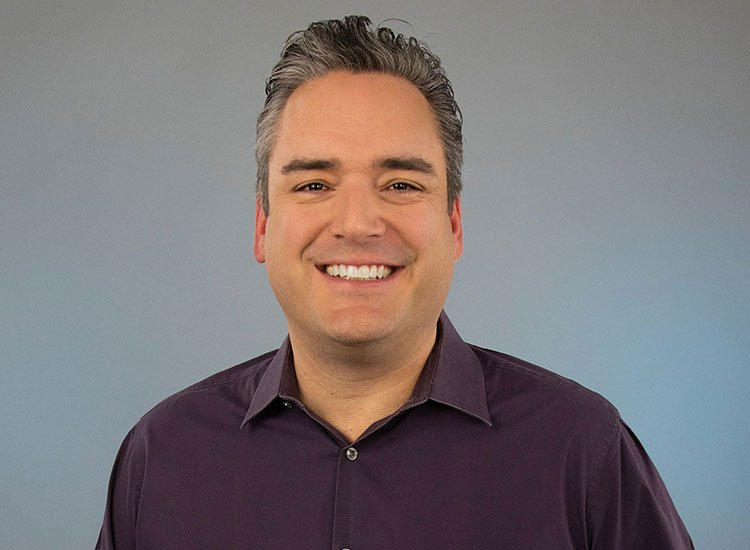
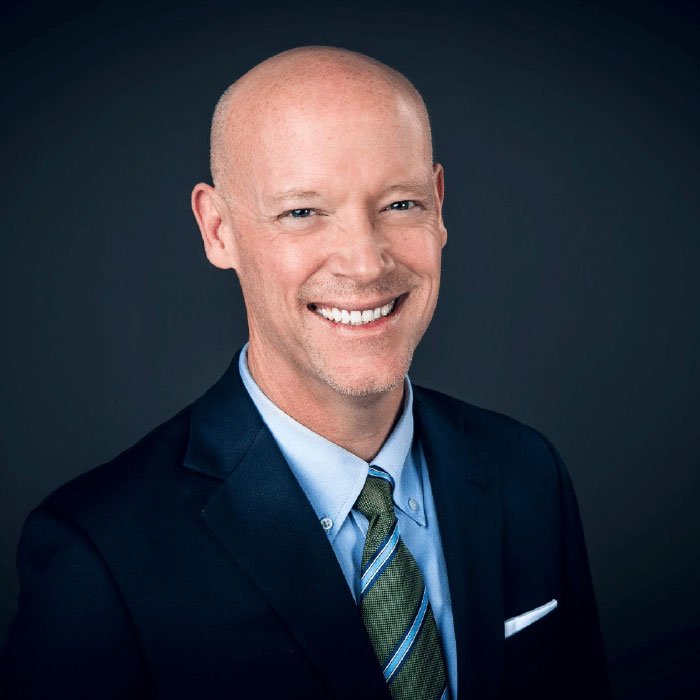
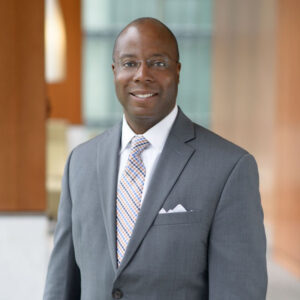
In this episode of The Matt Feret Show, Matt sits down with Gregg Lunceford, Managing Director and Wealth Advisor at Mesero Wealth Management and author of Exit From Work, to explore the psychology of retirement and what Gregg calls “the third age of life.”
Gregg explains why work provides much more than income, including structure, purpose, psychological success, and social connection — and why losing those things can leave retirees feeling lost, anxious, or disconnected even when their finances are secure.
If you enjoyed this episode of The Matt Feret Show, you may also enjoy:
How Service, Trust, and Leadership Help Older Adults Thrive at Home with Amrit Dhaliwal
The Matt Feret Show Episode with Brent Kesler on Building and Using Wealth Differently
Listen to the episode on Apple Podcasts, Spotify, Deezer, Podcast Addict, Stitcher, Google Podcasts, Amazon Music, Alexa Flash Briefing, iHeart, Acast or on your favorite podcast platform. You can watch the interview on YouTube here.
Brought to you by Prepare for Medicare – The Insider’s Guide book series. Sign up for the Prepare for Medicare Newsletter, an exclusive subscription-only newsletter that delivers the inside scoop to help you stay up-to-date with your Medicare insurance coverage, highlight Medicare news you can use, and reminders for important dates throughout the year. When you sign up, you’ll immediately gain access to seven FREE Medicare checklists.
“Work gives us much more than a paycheck. It gives us psychological success, socialization, and structure. Most people don’t realize how important those things are until they disappear. Retirement isn’t just leaving a job — it’s figuring out who you are when the structure is gone.”
“The third age is this recognition that you get to reset and redefine life on your own terms. You have more wisdom, more freedom, and often more resources than ever before. This should be one of the best stages of your life — but you have to intentionally design it.”
“The happiest people I see in retirement are the ones brave enough to structure life on their own terms. They stop asking, ‘What am I supposed to do next?’ and start asking, ‘What actually brings me meaning, energy, and joy?’”
Host’s Links:
All Things Medicare: prepareformedicare.com
Decoding Social Security: prepareforsocialsecurity.com
My Written Works on Amazon: www.amazon.com/stores/Matt-Feret/author/B09FM3L4WW
The Matt Feret Show YouTube: www.youtube.com/@themattFeretshow
Network with me on LinkedIn: http://www.linkedin.com/in/mattFeret
Follow me on X: twitter.com/Feret_matt
See behind the scenes on Instagram: www.instagram.com/matt_Feret/
Guest’s Links:
Linkedin: https://www.linkedin.com/in/gregg-lunceford-phd-cfp%C2%AE-3aa83a15/
Matt Feret (02:26)
You know, for most of our careers, the goal is clear. You work hard, you build your career, you save money, you prepare for retirement.
But something interesting happens when people actually start to approach those moments and those important moments. Many financially prepared adults struggle to make the transition, not because of money, but because of identity.
See, for decades, work provides structure, it provides purpose, it provides relationships, and a sense of progress over the years. So when retirement arrives, the real challenge may not necessarily be financial, but it is psychological.
Today's guest has spent years studying what he calls the phenomenon of retirement, the emotional and social transition from career identity into what he describes as the third age of life. It's a stage that can last 20 or even 30 years. And the question isn't just how to afford it, although that is a big question, but beyond that, it's how to design it.
My guest today is Gregg Lundsberg. Gregg is a Managing Director and Wealth Advisor at Mesero Wealth Management, where he helps clients protect, preserve, and grow their assets as they approach and enter retirement.
But Gregg also brings something unique to retirement planning. He holds a PhD in management and has conducted academic research on the psychology of retirement transition, which is studying how identity, purpose, and social structure influence whether people actually thrive after leaving their careers.
He's also the author of Exit From Work and frequently speaks about what he calls the third age, which is that stage of life somewhere between middle age and elderhood, or older adulthood, defined by reinvention, purpose, and opportunity.
Greg, welcome to the show.
Gregg (04:33)
Thanks, Matt. Wonderful to be here.
Matt Feret (04:35)
Yep. So I gave you an introduction. You're going to tell us more about you, but tell everybody what you do and, heck, how long you've been doing it. And I think I know how you help people, but in your own words.
Gregg (04:46)
Well, I've been in financial services for over 30 years.
Part of it was on the institutional side, where I held responsibilities in corporate and investment banking. Then, mid-career, I shifted to wealth management, which is where I am today.
I work with a number of clients, helping them figure out their financial futures, whether it be goal planning for retirement, college savings, or the next chapter in life.
But as we'll dive into a little later on, one thing happened to me maybe 15 years ago — getting older, maybe closer to 15 to 20 years ago — I started to recognize that there was just more to a successful transition in retirement than being able to plan for it financially.
So I went back to school and got a PhD from Case Western Reserve University, where I started to study what it is that a person goes through — not in retirement, because there is a lot of study out there about retirement — but it's usually looked at through the lens of gerontology, meaning they're examining how you age, not necessarily how you thrive.
I've researched it through a different lens, looking at what causes a person to positively thrive, or what are the emotions they feel going into the process as well as starting the process.
That's what we focus on: not just helping people figure it out financially, but setting the stage so that they can have a more holistic retirement planning process and a better experience.
Matt Feret (06:23)
Thanks for that. That raises a couple of questions in my mind.
I think that's something people probably don't anticipate, and when they get into it, it can be really unnerving.
Do you think that's one of the reasons why people who are prepared financially delay retirement?
We see so many people in our business that are retiring and they call in and they're like, “I'm still working. I'm still 74. I'm 80.”
Do you think that's one of the reasons? So if they're financially prepared, they delay retirement even when they can clearly afford it. Why does that happen?
Gregg (07:02)
I think that people don't understand the phenomenon, and that's how this started.
How it started for me was 2008, when we were in the mortgage crisis and people were getting laid off. So you have an unemployment rate that is double digit.
People started coming into my office asking for consultations for retirement, and we were going through all the retirement numbers. They were getting early exit packages from their employer, so these were generous opportunities.
And we're going through the numbers, and we had three meetings. They'd ask us to run it forward, we'd run it backwards, we'd run it sideways.
“You can afford to retire.”
And there was something unsettling there.
So I said to my company, “There's something we don't understand. There's something else going on.”
The response I got was, “Well, if there's something other than financial, we can't design a product around it. Why should we focus on it?”
And I looked at it a little differently.
The better you understand your client — people, what they go through — because at the end of the day, I think a lot of the products we use are commodities.
The experience we create, that's the unique thing. People want to work with people they feel understand them, connect with them, and have a wisdom that can guide them.
So I went back and studied it as a researcher.
When I started to open up the research, I realized there was a research gap. A lot of this, as I mentioned, was talked about through the lens of gerontology, but a lot of this is psychology, sociology, and a number of other things that you have to blend together to kind of figure out what's going on.
Today's retiree is going to have an experience no other cohort has ever had, and that is we're living longer.
And because we're living longer, across the globe, this is an issue in every society.
I am happy to discuss what my experience and findings are because I feel as though it creates a better opportunity for us to thrive.
The best thing you can do, in addition to wealth, to prepare for retirement is do things that give you positive experiences as they relate to your health.
And if you can combine the two, then you get a more holistic experience.
Matt Feret (09:25)
You talked about '08, '09, and the fear — because that's really what that was, right?
You were talking to people and they were getting generous exit packages. “Hey, get out of here. Here's a lump sum,” or whatever.
And you're like, “Are we safe?”
And then you'd say yes because we ran it forward.
“Well, run it backward. Am I still safe?”
“Yeah, you're still safe.”
“Well, run it again.”
There's fear there, right? There's environmental fear and there's age fear because it probably became unannounced at an age and stage they didn't anticipate.
So your very first inkling there was what you found was a psychological transition or a psychological hump that wasn't being hurdled by mere product fit.
It wasn't “Do I roll X into an IRA?” or “Is my mix 90/10 or 60/40?”
So it's a psychological transition, not a financial one, even though financially you're telling them, “Dude, you're good.”
Gregg (10:26)
Absolutely.
And I didn't even recognize it at the time.
When I came into the industry, and you used to see commercials that kind of confirmed this, we were told retirement was an economic choice.
People work until they economically don't have to, and then they exit out.
I remember seeing commercials around that time — “What is your retirement number?” — and everyone's thought bubble as they walked to work was as if as soon as they hit that number they were going to walk into the office and say, “I'm done.”
What I learned in this process, while people were coming back for these consultations and asking for another consultation versus making a decision, is one day a lady goes, “Look, I'm not worried about the money. I know this is our third meeting. I just don't know what to do with myself.”
That caused me to pause and go, “How could that be possible?”
I thought this was an economic choice.
I thought you were supposed to walk out the door.
It just seemed so easy when you're early or mid-stage career and you wish you could get a vacation day.
And then now you have all this flexibility and freedom, and this person is like, “I'm stuck.”
And you're going, “What are you stuck with?”
That made me curious and I started to dig in a little bit more.
There are other things that make this frightening no matter where you are financially.
If you're disconnected from the things that make you feel good every day, if you're disconnected from your friends, if you're trying to figure out how to reestablish yourself, for a lot of people, no matter how successful they are, it is a hard transition.
Matt Feret (12:20)
You talked right there, and that example you gave — she may have had a bit of an identity crisis, right?
But what it sounded like is she had a structure crisis.
Like, “What am I going to do?”
Work starts at this time. Lunch is from 11:30 to 12. Work ends at four or five or six or seven. Rinse, wash, repeat.
Gregg (12:44)
Could be all of the above.
The thing is, when we enter into the workforce, primarily when we are younger versions of ourselves, we're looking at work as providing one purpose: the exchange of labor for money.
“I've got to pay my rent.”
Matt Feret (13:02)
Yeah. Time for money. I need to pay the rent.
Gregg (13:07)
I think it's not until those last few years that you start to recognize there are non-financial benefits to work.
And once you figure it out, you realize, “I need that.”
There are three things work does from a non-financial standpoint.
One, work provides us with psychological success.
Who does not enjoy being known for being good at something?
Every time you execute your role and someone says, “Great job,” that's a positive affirmation that makes us feel good.
That gives us a reason to get out of bed.
That makes us feel as though we matter.
Whether it's a small recognition or a large recognition.
As I started to do my research and talk to people about their roles, even people who do things that may not look like terribly big roles inside institutions or society, just the fact that someone smiles at them and says thank you matters.
“I appreciate you always having the coffee shop open on time.”
That warms our heart. That gives us a reason to be there.
The second thing work provides is socialization.
We spend more time at work than anywhere else, and so our friends become very valuable.
Even the colleagues we don't like to work with give us something to laugh about.
The third one — and you hit on it earlier — is that we overlook the importance of structure in our day.
Work provides structure of time.
I once had someone tell me, “I have my own business.”
I said, “When are you going to retire?”
He said, “I don't know that I could do that.”
I said, “Why?”
He said, “Well, I work in the business five days a week. That's great. I get to see clients and go to events and be about my business in the city.”
He said, “This Saturday I had all these personal things to do, so I did them. Then by Sunday I was bored out of my mind.”
He said, “I could not imagine 30 Sundays in a row.”
A lot of people have difficulty inventing things to do.
They get used to walking into a work environment where lunch is at this time, meetings are at this time, breaks are here.
A lot of people need that structure.
I think people coming out of highly structured environments, like the military, can especially struggle with this.
Matt Feret (16:14)
Yeah, I can imagine.
Gregg (16:34)
When you've had such a regimen beyond what civilians experience, and basically a manual that tells you what to do at every point in time in case you're confused, a lot of people have a hard time reestablishing themselves once they leave that structure.
So those three things are very important, and you have to prepare for them just as you prepare for the financial piece.
If not, it can be a very challenging transition.
Matt Feret (16:50)
You've studied what you have called the phenomenon of retirement. Are those three pieces it, or what does that phrase mean holistically?
Gregg (16:55)
The phenomenon is this: it's different in the 21st century than any other period.
Oftentimes, because the behavior going into retirement is you just do what the next person did.
“Why are you leaving at 65?”
“Because they told me that was the age.”
“Why?”
“Because that's when Social Security pays out.”
“Why?”
“Well, that's what my parents did, and that's what their parents did.”
So the phenomenon is: what do you do when you get into this period where globally we all live longer?
And then you're starting to see more cognitive decline from things like anxiety, depression, and things like that, which I associate with not having those three non-financial things that come along with work.
So the phenomenon is we're living longer.
We are also in a period where we don't have a structure already picked for us.
In the past, the system told us what to do, so you didn't have to figure it out on your own.
Then you have fewer safety nets because pension plans don't exist the way they used to.
Less than 20% of companies have formal pension plans.
Those were traded out because of what happened in terms of longevity.
Companies can't afford to pay employees for 30 years outside the workforce in retirement.
So they gave you this 401(k) or 403(b) or 457 plan where you have to figure it out on your own.
So there's this fear: “What if I run out of money?”
And then you have fewer safety nets in terms of things that are major costs in retirement, such as healthcare.
When you throw them all together, it really requires a new view of retirement, as well as a new action plan and understanding of a number of disciplines that we don't naturally come equipped with because we've never had to do this before.
Matt Feret (18:58)
And going back to your '08, '09 example — not necessarily the date range, but the layoffs and unexpected layoffs, even with exit packages.
We've talked about how there may be a white-collar recession going on.
Corporate people kind of know when you're in your fifties, you're probably going to get sniped.
Is it ageism? Is it age discrimination? Maybe. Maybe not.
But the point is that you may think retirement happens at 65 or 67 and a half, but it can come a lot faster and be very jolting.
So this concept you talk about of the third age — is it date or age-range specific, like age 65 to 90?
Or is it when these events begin?
Gregg (20:24)
Well, the third age — let me explain what it is first.
We're used to thinking in terms of going from youth to middle age and then into old age.
Because we're living longer, you get this 20-year life bonus.
The third age is this recognition that you go from youth to middle age to this thing that's undefined now called the third age, and then into old age.
When you think about it, if I am 60 and the IRS is telling me they're going to calculate my required minimum distribution using a chart that assumes I'm going to be 90, then if I have until 90 and I'm 60, I'm closer to middle age than old age.
So “60 is the new 40.”
Society sends us all these signals that we're going into old age when really we should be thinking more like our 40-year-old self and saying, “What was life like when I was 40, and what was I trying to do?”
When you were 40, you were trying to accomplish things.
You were trying to get better at something.
The third age is this recognition that you get to reset and be “40-ish” again.
The reason this should be the best time in life is that for the first time in your life, when you get this 20- or 30-year bonus, you can do anything with it.
You have become who you were going to become.
You've gotten educated.
You've raised your family.
You hopefully have more wealth than you've ever had before.
You're wiser than you've ever been because of your life experiences.
Now you enter into this age where you can define things on your own terms.
You have the financial wherewithal, the wisdom, and hopefully the confidence.
You get to do whatever you want, when you want, how you want.
It is the most freedom that a person could ever have at a time where they also have more resources than ever.
So this should be the best part of your life.
But if we don't come out of the old view of retirement, people continue treating it negatively.
Retirement originally was never viewed as a favorable thing.
It was really a negotiation between management and labor.
Management wanted younger employees because they were faster on the assembly line.
Labor unions wanted seniority rewarded so older people wouldn't become impoverished.
So retirement became: “We're going to pay you to stay home because you no longer have value in this work environment.”
That's how people were made to feel.
So retirement was never framed positively.
But now this third age is unlike anything else.
The difference is that you have to design it yourself.
Matt Feret (26:08)
And it sounds like part of this third stage is reinvention, isn't it?
Gregg (26:13)
Absolutely.
For a lot of people, it may even include work.
What you're really doing is redefining life on your own terms.
Those terms may include some form of work, or they may include exiting altogether.
The point is that you get to drive the process, but you have to structure and engineer it yourself.
Matt Feret (26:39)
What happens in your experience when someone leaves work, either voluntarily or involuntarily, without a clear vision for that third stage or what's next?
Gregg (26:50)
It can be very challenging.
Now, it all depends.
For some people, exit from work makes a lot of sense.
If you're in a role that causes you stress, anxiety, conflict, things like that, the exit is probably welcomed.
If you are in a positive environment that affirms who you are and where you have a lot of work identity tied to what you do, who you do it with, or the brand you do it for, it can be very challenging.
And it all depends on the individual.
A lot of it has to do with their lived experiences through work.
This is where we get into a little organizational behavior theory.
If you look at early Boomers, society told them what the definition of success was.
For many of them, it was: get into a corporation, stay there for 30 or 40 years, get the gold watch, and climb as high up the pyramid as possible.
So they developed traditional careers and traditional values.
They followed paths people told them they ought to follow.
That develops what is called the “ought self.”
You're basically an actor on stage from the time you are a little kid.
Someone asks what you want to be, your guidance counselor works with you on what you want to be, and whether it's doctor, lawyer, executive, or something else, you're preparing for this role.
If you successfully move through life and pass the auditions, eventually you become that thing.
But where this becomes hard is that many people never developed their “ideal self.”
The ideal self is who you really want to be.
The wonderful thing about the third age is this is the opportunity, for a lot of people, to develop their ideal self for the first time.
So it's always interesting when I sit down with very successful people and ask, “What do you want to do?”
And they'll say things like:
“I want to join a rock band.”
“I want to write mystery novels.”
“I want to work part-time at Disney World and just play with kids all day.”
It is often so far from the professional identity they spent decades building.
For many of these people, they never really got to develop who they truly wanted to be.
Now the third age becomes the opportunity to shrink the distance between the ought self and the ideal self.
That's what creates positivity.
The wider the gap, the more regret you feel.
Matt Feret (31:58)
So if I'm listening right now and I'm either approaching that third age and haven't thought about any of this, or I'm already in it and maybe I'm bored and thinking about going to work at Home Depot or Disney World or something just to have something to do — what do I do?
Gregg (32:41)
First of all, think about the things that really brought you joy from your work environment, and leave the financial things off the table.
You also have to redefine things on your own terms.
For a lot of us, because we've had terms dictated to us through work, this becomes difficult.
Work is basically a unilateral contract.
Your employer says, “I need these things done.”
You either do them or you don't.
This is the first time in life where you get to structure something entirely on your own terms.
The happiest people I see are the ones brave enough to structure things on their own terms and then negotiate for them.
There are organizations that would welcome this.
Smaller institutions especially may appreciate someone saying, “I only want to work 20 hours a week,” or “I only want to work seasonally.”
But they're not going to approach you with that.
You have to advocate for yourself.
And you also have to explain why it's valuable to the organization.
The other thing you need is meaningful play.
This is why bucket lists don't work.
Bucket lists came from a time when people had a short retirement.
But when you have 20 healthy years ahead of you, you finish the bucket list.
Meaningful play is about engaging in things that feel fun and engaging and don't feel like work.
That's what creates fulfillment.
Matt Feret (1:00:15)
Those are key things not only to that design — they're key things for all of us as humans all throughout life.
You just have to be intentional about it.
Greg, this has been fascinating.
You mentioned your book. Tell everybody about the book and where people can find you.
Gregg (1:00:21)
Yes. This is my book, Exit From Work.
It can be found on Amazon.
What it basically does, in very layman's terms, is break down some of the things I came up with in my studies and explain some of the things we've talked about.
It helps people understand the phenomenon and gives them tactics they can use to set themselves up for their third-age identity.
For people who want to know more about me, if you go to our firm's website, mesero.com, and put my name in the search engine, or just type “Gregg Lundsberg Mesero” into your search engine, you'll see my profile pop up.
You'll see my publications, interviews, and where to get the book, as well as other things I've done.
And if you want to drop me an email, my contact information is there as well.
Matt Feret (1:01:37)
Awesome.
And of course we'll have all of that linked in the show notes on the episode page as well.
Greg, this has been a fascinating conversation.
Thank you very much for having it.
Gregg (1:01:48)
Thanks for having me, Matt. I hope you enjoy it.
Matt Feret (1:01:50)
And for everybody listening or watching, I think what stands out to me — and definitely driven home by Gregg — is that retirement isn't simply about leaving work.
It's not a binary switch, on or off.
It's about designing the next chapter of life with intention.
And that has to happen before.
And if it doesn't happen before and you're already in it, maybe do it after.
It's never too late to plan this stuff.
When people approach this stage with clarity and purpose and curiosity about what comes next, it seems to me, talking with Greg, that they build stronger wealth and deeper wisdom and greater wellness and much better connections to their world, their life, and their family.
Anyway, thanks everybody for listening.
Thanks for watching.
Thanks for being here.
I'm Matt Feret, and I'll see you next time.





For up-to-date Medicare information, visit:
www.prepareformedicare.com