Most people are taught to save, invest in a 401(k), and hope it all works out in retirement. But what if that system isn’t designed to give you control when you need it most? For many in midlife, rising debt, taxes, and long-term care costs expose the cracks in traditional financial planning. That’s why today’s guest matters.
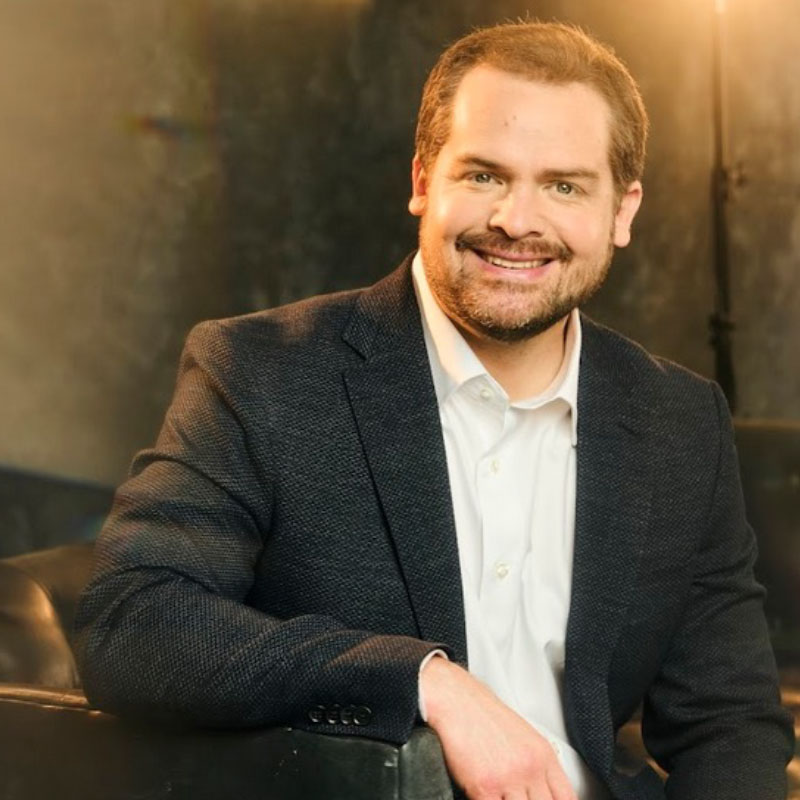
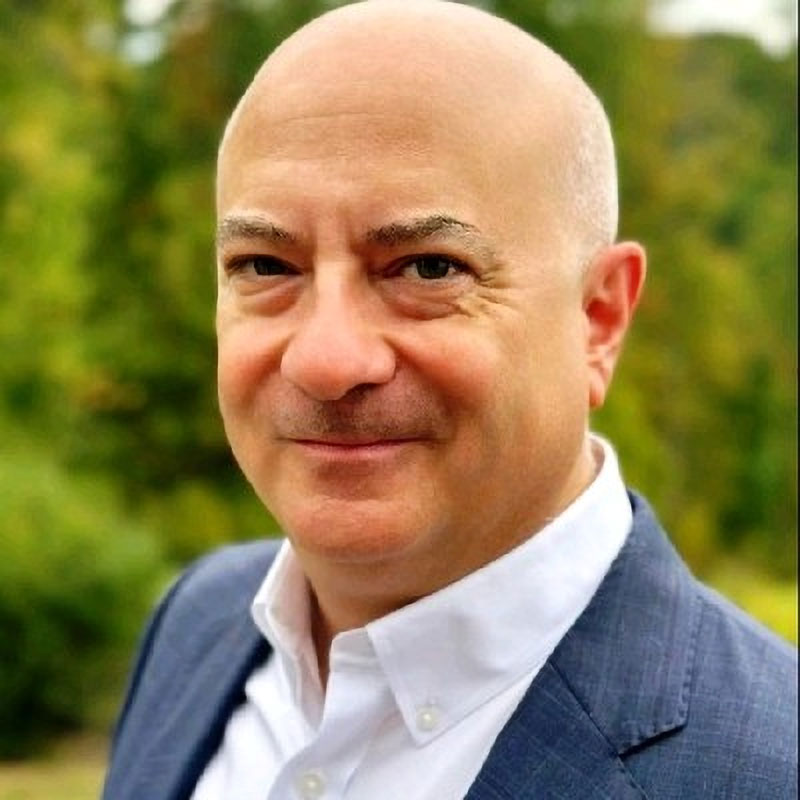
We’re joined by Brent Kesler, founder of The Money Multiplier, to break down an alternative approach to building and using wealth. Brent shares how he went from nearly $1 million in debt to debt-free in just over three years by rethinking cash flow, private family banking, and dividend-paying whole life insurance. He explains how this strategy can be used to pay off debt, invest in real estate, fund retirement, and maintain control of your money — without relying solely on Wall Street or traditional retirement accounts.
If you enjoyed this episode of The Matt Feret Show, you may also enjoy:
How To Pay Your Kid's College Without Wrecking Your Retirement
The 401(k) Playbook Has Changed (Especially for Business Owners)
Listen to the episode on Apple Podcasts, Spotify, Deezer, Podcast Addict, Stitcher, Google Podcasts, Amazon Music, Alexa Flash Briefing, iHeart, Acast or on your favorite podcast platform. You can watch the interview on YouTube here.
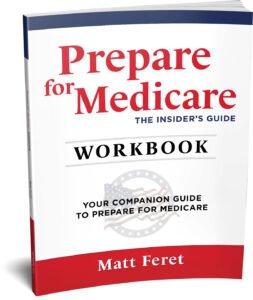
Brought to you by Prepare for Medicare – The Insider’s Guide book series. Sign up for the Prepare for Medicare Newsletter, an exclusive subscription-only newsletter that delivers the inside scoop to help you stay up-to-date with your Medicare insurance coverage, highlight Medicare news you can use, and reminders for important dates throughout the year. When you sign up, you’ll immediately gain access to seven FREE Medicare checklists.
I didn't have to change my cash flow. I never took any additional risk or lose or lost control of my money. I simply added one step in my financial life. So, I became really passionate about this concept. “
“I do very well. I don't starve at all. I don't miss meals. I do well. But I do take a 60 to 90 percent cut in my commission because of the way I design the policy. And I design the policy this way because it's the way I design my own policy. I am an open book. I show you everything that I'm doing in my own financial life and my own policies. I don't have anything to hide.”
“I thought to myself that these guys are basically throwing up all over me about how this is working financially in their life. So I thought to myself there had to be something to this method, right? There's no way that eight or ten of my colleagues are lying to me. Maybe one or two, but not eight or ten. So I came home and I told my wife in February of 2008, I said, honey, we've got to start implementing this concept in our life.”
Host’s Links:
All Things Medicare: prepareformedicare.com
Decoding Social Security: prepareforsocialsecurity.com
My Written Works on Amazon: www.amazon.com/stores/Matt-Feret/author/B09FM3L4WW
The Matt Feret Show YouTube: www.youtube.com/@themattferetshow
Network with me on LinkedIn: http://www.linkedin.com/in/mattferet
Follow me on X: twitter.com/feret_matt
See behind the scenes on Instagram: www.instagram.com/matt_feret/
Join our community on Facebook: www.facebook.com/themattferetshow/
Follow me on Instagram:Matt Feret (@matt_feret) • Instagram photos and videos
Guest Links:
Guest Facebook: https://www.facebook.com/themoneymultiplier
Guest Linkedin: https://www.linkedin.com/in/thebrentkesler
Guest Instagram: https://www.instagram.com/the.money.multiplier/
Guest Youtube: https://www.youtube.com/@the.money.multiplier
Guest Webpage: https://themoneymultiplier.com/
Matt Feret (02:29)
Hey everybody, today's conversation is about money, how it works, how it's traditionally taught and why some people believe the system of most of us rely on isn't designed to serve us very well in midlife or retirement. My guest today is Brent Kessler, founder of the Money Multiplier. Brent started his career as a chiropractor, built and sold multiple successful practices and then found himself nearly a million dollars in debt. Ouch.
What changed everything for him was discovering and then fully implementing a financial strategy centered on cash flow control, private family banking, and dividend paying whole life insurance, often referred to as the kind of a brand name, the infinite banking concept. Today, Brent teaches this approach.
nationwide, he's helped thousands of people and families rethink how they save, borrow and invest and has built a substantial real estate portfolio as well on top of this using these principles. So today's conversation is about alternatives. What works, what doesn't, where this particular approach shines and where it may not be for everybody. Brent, welcome to the show.
Brent Kesler (03:43)
Hey, thanks for having me, Matt. Looking forward, excited to share with your community today.
Matt Feret (03:48)
Same. I'm looking forward to having you share. And I love topics like this, know, the stuff we grew up with and, you get a job, put your money in your 401k, put into IRAs, right, save for a rainy day, keep trucking. I love alternative approach or just, you know, food for thought, you know. So before we get in all that money stuff, okay, you were a successful chiropractor, multiple clinics. So how does that guy end up a million bucks in debt?
Brent Kesler (04:18)
Yeah. and again, thanks for asking just to take you back a little bit. Yes. Yes. So that is right. I was a chiropractor. I still am a chiropractor. I just don't practice anymore. ⁓ I had five clinics in the Kansas City area and I started my first clinic and then I decided I wanted to move my clinic closer to my house. So I was going to take the clinic that I had and I was going to sell it. But it was during a time that, you know, it was hard to sell a clinic and, you know, nobody was getting loans and
So I decided to hire an associate doc and still open another clinic. So I hired that associate doc. I trained them to run that clinic. So I kept the clinic and then I went to the other clinic and I said, well, heck, this is working good. I want a little bit more time freedom. So let me hire another associate doc to run this clinic. And then I opened up a third one. Then I acquired a fourth one and a fifth one. So it just happened to work out that way. It was never planned to go that way. I had...
The only reason I wanted the second one is to sell the first one to get a clinic closer to where I live because the very first time I opened the clinic I thought my family was gonna move to that area, but then my wife said no no no I want to keep the kids in this school district, so I don't want to move so I said well Let me get closer, so it's kind of crazy how all things work, but yeah anyway, that's just to kind of go down the background a little bit and ⁓ actually back in it well
Like and of course, okay, the thing I said, I still am a chiropractor. I don't own any clinics anymore. I sold my last one in 2017 and the majority of the clinics I had, Matt, I sold them to doctors that I had hired and trained to be associate docs in the clinic. So they already knew what was going on. So it was a pretty easy transition to sell to somebody that was already in there. So anyway, as I said, this was in the Kansas City area. My wife and I became empty nesters and
we decided to move to Florida. Well, that's where I'm originally from is Florida. So back in 2017, we moved to Florida and it just so happens I sold my last clinic in 2017. And so, and of course I probably would have moved away from Kansas City earlier, but my kids were still in high school and they didn't want to move. But believe it or not, after I finally moved to Florida, guess where the kids came. They came to Florida too. They followed us down here, right? I, hey,
Matt Feret (06:39)
Florida.
Brent Kesler (06:43)
Again, I told my wife not to give them our forwarding address, but she gave it to them anyway, and they found it. So here they are kind of at the back door. yeah, just to get a little bit in the back story, know, ⁓ anyway, having these clinics, I found myself in quite a bit of debt. I found myself in third party debt, and I went to this chiropractic conference back in 2006.
And again, back in 2006, I was there to learn skills of how to build my practice, how to make my practice more successful from the business.
Matt Feret (07:18)
Yeah, yeah, you go to those things
for scale, right? And they say, well, if you're a solo practitioner, how can you make, you know, another solo, how can you expand? And then how do you how do you do that? So you go from one to five or five to 10. And, know, scale always scale always wins you read not always though.
Brent Kesler (07:32)
it.
Yeah, exactly. So that was back in 2006. And I heard somebody at this chiropractic conference that I was at, and he was talking about this thing becoming your own banker, the infinite banking concept. And I was really intrigued with the information that I heard. However, I thought it was too good to be true. said, man, there's something these guys aren't telling me, right? There's no way this concept can work this way. It's got to be too good to be true. There has to be a catch. So I left that conference in 2006. I did nothing with the information.
that I learned at all. I just went back to my normal chiropractic life. So then about two years later, early in 2008, I went to another chiropractic conference. And it just so happens about eight or 10 of my chiropractic colleagues that were at the conference earlier with me, right in 2006, were at this new one in 08. Now, the only difference between them and me is they heard this same concept that I did. They sat in the same room that I did, and they heard this Infinite Banking Concept stuff.
but they decided to implement it in their life. So they just assumed that I had also implemented it in my life, but I hadn't. So they were coming up to me during that time, during that conference, and they were saying, Brent, isn't this banking concept a powerful tool to build wealth, to pay off debt, to recapture, recycle money? And I was like, and again, I kind of forgot just what they were really talking about, but then I kind of remembered after a while.
I thought to myself that these guys are basically throwing up all over me about how this is working financially in their life. So I thought to myself there had to be something to this method, right? There's no way that eight or ten of my colleagues are lying to me. Maybe one or two, but not eight or ten. So I came home and I told my wife in February of 2008, I said, honey, we've got to start implementing this concept in our life.
Now Matt, was at that time in February of 08, I was $984,711 in third-party debt. Now know what you're thinking. Well Brent, how do you even know what that number is? Well that was part of the exercise. I had to know what that amount was. And let me just tell you, that can be a very painful exercise to look at. Most people don't want to look at that stuff, right? Whether it's good debt or bad debt, they just don't want to look at that number. But that was something that I had to look at. It was part of the exercise.
Matt Feret (09:56)
was
and was that and I'm trying to get the chronological chronological facts straight was that when you were still a solo practitioner or you had already gone into number two number three number four
Brent Kesler (10:07)
No, actually at that time I had just opened up my second clinic because I opened up my first clinic in ⁓ for early for and the second clinic I opened up in ⁓ seven so at that time I had two clinics going on and I was juggling both of those clinics had an associate doc had staff at both clinics and You know almost a million dollars in debt. Well, how do you get to be a million dollars in debt? I know if you live in California that buys you a very very small house, but in Kansas
Matt Feret (10:12)
Okay.
Brent Kesler (10:37)
Back in 2008, you could buy quite a bit of crap for a million bucks, right? So I had the house that I lived in, my primary residence. I had my student loans from chiropractic school. At that time, I had two chiropractic clinics. I also had a house in the Lake of the Ozarks between St. Louis and Kansas City. And Matt, if you live on a lake, you have to have a boat and a wave runner. You just can't live on a lake without a boat and a wave runner. It's one of those requirements. So I had that.
And then I'm also an airplane pilot, and as an airplane pilot, I had to have my own airplane. Yeah? So it didn't take me a lot to become almost a million dollars of debt. Now, I'm not saying all the debt was good debt, and I definitely had to have all those things, but I wanted those things. So, you know, I found a way to acquire them and acquire the debt load. So, anyway, I found myself in all of this debt, and I'm like, okay, how do I get myself out of this mess?
mess that I put myself into because nobody else put me there but myself, right? I like to call it financial bondage. I was I was a slave to the money. I was a slave to the financial world because I owed them. It didn't matter if I was sick or if it was hot or cold outside or what was going on. Pandemic, no pandemic, know, Republican, Democrat, president, all that crap didn't matter. The bill collectors wanted their money when it was due. They didn't care what was going on in my life, right?
Matt Feret (11:31)
Right, right.
Brent Kesler (11:56)
So that caused a lot of stress, obviously. So ⁓ again, I had just taken this concept and I started implementing it in my life in February of 2008. And after I implemented these
Matt Feret (12:09)
I let me let me pause you. Let
me let me me pause you just there for a second. So it took you two years. So initially, you heard it and went, huh, there must have been some sort of skepticism in that two years. And then you heard it again. And you said, dude, 10 of these guys have done it. And it seems to be working and I'm a million bucks in debt. Why do you think looking back? Why were you skeptical for those two years? Was it sheer like, I mean, there's 500 different approaches to managing one's money, right?
Brent Kesler (12:13)
Yeah.
Matt Feret (12:38)
And and and you've got all the books going all the way back, you know, 100 years on this topic. What made you skeptical for the first and then and then what other than the fact that your buddies were doing it? Was it was it the debt pressure or was it that your buddies, your co your colleagues? Sorry, not your buddies. Like you were skeptical, didn't do it for two years. What drove you to that point to go like, I got to change something and this is it.
Brent Kesler (12:38)
Yeah.
Yeah, well, exactly. I was skeptical. as I look back on it, part of my skepticism was I just wasn't smart enough or didn't have enough common sense to research it any further. I heard about it and had my own prejudged opinion that there's got to be a catch. It's too good to be true. But then when I heard
Matt Feret (13:19)
Okay.
Brent Kesler (13:20)
But then when I heard my colleagues were doing it and implementing it in their life and it was working really well for them, I was like, well, if it's working for them, why can't it work for me? So even though when I started the concept in my life in 08, I was still a little bit skeptical, not as much as and and then I'll also say my wife was very skeptical because when I told her and I came to her and I said, honey, we're going to start this new concept in our life and I'm going to put two thousand dollars a month into this new thing.
She was like, we're going to do what? Now look, Matt, my wife is not the type of person that believes in divorce. She does not believe in divorce, and she's very analytical and very detailed. She has a master's degree in nuclear engineering. She actually helped design the nuclear reactor for the US Navy submarine. So she's very, very detailed. And when I came to her and I said, honey, we're going to start this concept. It's going to work because
Matt Feret (13:52)
Ha!
Brent Kesler (14:17)
my colleagues, my buddies are doing it. so, just after I came to her and told her that, she was like, we're not going to do that at all. And as I said, she doesn't believe in divorce, but we actually came close to going to the attorney's office to talk about divorce. That's how bad the conversation actually happened, right? So,
Matt Feret (14:37)
Yeah, that sounds like
a pretty bad conversation.
Brent Kesler (14:40)
But then, after learning a little bit more, my wife's thought process is, and again, as you kind of learn more about this, you'll understand this more, but my wife's thought process was, look, Brent has this bad habit of spending money because I was a spender. I mean, I just told you, boats, airplanes, wave runners, right? So, I was a spender. And this was a way that she actually saw without telling me at the time. She said, you know what? Yes, I'm going to do this with him because this is going to force him.
to save money. It's going to force him to save. So it was a forced savings. So just to kind of fast forward, know, in February of 08, I implemented this concept in my life, almost a million dollars in debt. I was able to apply these concepts and these principles that I learned, and I was able to pay that debt off in 39 months, three years and three months. And Matt, I never had to work harder.
Matt Feret (15:11)
the forced savings plan implemented by your wife. ⁓
Yeah. Yeah.
Brent Kesler (15:37)
I didn't have to change my cash flow. I never took any additional risk or lose or lost control of my money. I simply added one step in my financial life. So, I became really passionate about this concept. So, guess what I was doing? I had a lot of chiropractic colleagues in my life because I was actually coaching chiropractors on the sales and marketing of business. I had a chiropractic mentor. His name was Dr. Eric and he had a coaching program.
He had members. He had these different types of membership. He had platinum, diamond, and gold members is what he would classify him as. It just depended on where you came in on what level of his coaching platform. Actually, he took all the platinum members, but he needed coaching assistance for his diamond members. So I was coaching these diamond members. I wasn't coaching them on techniques of how to operate a chiropractor or as far as how to adjust clinical stuff.
I was coaching them on the techniques of how to build the practice and get patients in the door to stay, pay, and refer. It's the stuff they don't teach you in school. So, as I'm having these coaching calls with these clients, I have to talk to them about money and wealth. And if I'm talking to them, well, I got to tell them what I'm doing. This is what I'm doing. This is what I'm implementing in my life. And during that time, I am implementing these same strategies in my life.
and I'm talking about it and I'm saying, I don't know everything there is to know about it, but the guy that I learned it from, go talk to him. So then, here's what happened. One day, it was roughly around the end of 2011 or so, so anyway, this guy Ray that taught me the concept, ⁓ and again, he's passed away now, but the thing is that Ray came to me because I went to his office to ask him some questions about my
personal infinite banking program. I wanted to ask some questions. Anyway, it's in a two-story office building. He walks downstairs and he says, Brent, I was looking through my records and I I've seen that you've referred me a total of 47 clients because I was referring people to him. I kind of laughed about it and I said, well, Ray, you never paid me a dime for any of those people that I referred you. Yeah, you didn't pay me a dime.
Matt Feret (17:34)
Sure. Yeah.
my gosh.
⁓ I was gonna say I mean, did you did you get a nice Christmas ⁓ chocolate
package?
Brent Kesler (18:00)
But the thing is, here's what he said. He said, no, in all seriousness, he says, you do this very well in your financial life. He says, you're telling people about it. He says, you should consider doing this yourself. I said, really, I could do it. I said, what do I got to do? He says, go get licensed and I'll help train you and teach you. And that's what I did. So, in March of 2012, I went and I got licensed to actually do and teach and get paid.
for this concept that I teach. I'm going to get into just a minute of what the concept is all about. You've kind of already hinted a little bit about it, but we'll kind of explore that a little bit more. Just to go back a little bit, there's a book out there. It's called Becoming Your Own Banker. The guy that wrote this book is named R. Nelson Nash. R. Nelson Nash was my true mentor in this concept. R. Nelson Nash
He passed away about six years ago in March of no almost seven years ago now in March of 2019 at age 87 years old Matt this book completely changed my financial life I'm gonna recommend to all of your viewers wherever you buy books at wherever you go get your books at go find this book go out and find this book and Add it to your wealth building library. It completely changed my financial life. So anyway, so Nelson Nash
He was my mentor, my longtime mentor in this, before he passed away about seven years ago. So, again, I started teaching this in March of 2012. I just started teaching it through my own inner circle of people and colleagues. A lot of those were chiropractors. Then, guess what happened? I started getting invited on stages to speak on stages at different conferences, at retirement seminars, wealth building.
conferences, a lot of stuff that has to do with real estate, network marketing. mean, again, all kind of conferences, you know, you can think of. As a matter of fact, my daughter, teaches the concept now, 26 years old. She's on a plane right now heading to Langhorn, Pennsylvania to teach tomorrow, right? So, kind of fast forward just from 2012, and here I'm teaching now at 50 to 70 live events a year, doing 100 to 120 Zoom podcasts.
Today we're doing Riverside, right? I'm doing these events. And up until about last year, maybe 18 months ago, I mean, I was doing all live events, speaking all around the country. I still do that. I just don't do it as much. all I do, Matt, all I do is I teach people the concepts of wealth building that is not new. It's not on trial. It's not being tested.
It's been around for over 250 years. So if you research the wealthy people in our history, people such as the Rockefellers, the Rothschilds, the Morgans, the Stanleys, the Barclays, if you go research how Walt Disney built Disneyland, how Ray Kroc built McDonald's, ⁓ as far as how Pampered Chef got started before Warren Buffett purchased Pampered Chef,
These are the concepts and the principles and the processes that these people have been using in their life for over 250 years. But nobody really brought it to light. Even in this book that Nelson wrote. And Nelson, I give credit for really bringing it to light. mean, honestly, Matt, this book is a hard read. It's not an easy read. All right. I've read this book probably 116 times.
over the course of going on 20 years now. I still read the book, and generally, I read it once a year before I do our live Mastermind event that we do once a year, just to kind of refresh myself of all the stuff I've forgotten. I've realized by reading it, even though I've been reading it every year for almost 20 years, there's a lot that I forgot that I've read. When I go back, I'm like, I don't even talk about that anymore, right?
So now, that's what I do. I don't sell anything. I don't ask anybody to buy anything. I just simply teach the financial concepts of what the wealthy have been using. And if people like the information, if they like the information, our company is called the Money Multiplier, if people like the information and they want to implement it in their life, then they have to do it with a licensed agent.
And that's what I am. I'm a licensed agent in every state of the country. So hopefully if you hear this information from me or from someone on our team at the Money Multiplier, and if you decide to implement it in your own life, you'll do it with us. You don't have to. You don't have to. There's many people you can do it with. But most people that hear it from us will start with us. So that's what I do. I simply I give, pour into people the educational process of how this works, and then people make their own decisions.
Matt Feret (23:01)
Right.
All right.
Alright, so hit me with it in a nutshell. What is it?
Brent Kesler (23:15)
Yeah.
And again, so you've already said it. I don't know how many people caught it, but maybe the people that did catch it when you said it, hopefully they didn't tune us out and turn us off, because a lot of times, when I tell you, what is this wealth building tool? What is the product we're going to use to get wealthy? People say there's no way, and they tune us right out. So when I say it,
Expect to drop off about 20 to 25 percent of the audience I don't know if you can see how many are on right now and then how many are gonna drop off But it will happen people will drop off. Well, here it comes You're ready the vehicle that we're gonna use to build keep and create wealth is a whole life insurance policy in a mutual company that pays dividends Now I just said that nasty word life insurance and here's the thoughts that are running through a lot of people's mind I know it
Matt Feret (23:47)
worry about it. Don't worry about it.
Yeah.
Brent Kesler (24:08)
because I eat, live, and breathe this stuff every day and I know what people think. They're thinking life insurance, that is a stupid, crazy, ridiculous idea to build wealth. As a matter of fact, both Dave Ramsey and Susie Orman said that would be a horrible idea to use life insurance to build wealth. Well, let me just tell you, you do not know everything there is to know about this because if you did, you would implement it in your own life. Now, I want to be clear. This is not any type of life insurance policy. No, no, no, no.
This is not, Matt, the life insurance policy you can go buy from your brother-in-law that sells life insurance. We all have a brother-in-law that sells life insurance. It is not that type of policy. This policy is a specifically designed, specially engineered, whole life insurance policy, very key word, whole life, in a mutual company, another key word, mutual company, that is designed for high
immediate cash value that pays dividends. Another keyword, high immediate cash value. So, what does that mean? That means when you put money into this policy, and you get to choose the amount you want to put in, and you get to choose how often you want to put it in, when you put money into this type of policy, you immediately, and anybody that knows me, my definition of immediately is within 30 days. So, immediately, aka 30 days, you can now
access the cash value of that policy to go buy anything that you want to buy in life. Whether you're investing money, spending money, whatever it is. And I know that we're to talk about different subjects like maybe purchasing real estate, investing, maybe buying a piano, a TV, a car, a bicycle, a boat, whatever. Right? Even retirement. Right now, I am going through this thing with my in-laws. I'm going to be 59 this year. My wife will be 61.
Well, anyway, my in-laws, her dad is 91, her mom is 88. Her dad will be 92 this year, 92 and 89 this year. So, we are in the process of moving them to assisted living. ⁓ The dad probably doesn't really even need to go to assisted living, but dad doesn't want to be away from the mom, and mom has Alzheimer's and dementia, and it's like, it's too hard for a 91-year-old man to keep care of an 88-year-old woman with dementia and Alzheimer's.
in their own house. So we're going through that right now as we speak. just had a conversation today. We were hoping this two-bedroom unit came available that's close to us because they currently live in Dallas right now and I'm down here in Florida in Daytona Beach. So they're coming to Florida and we just found out that last Friday the couple that are in the two-bedroom while the wife had a stroke and now they're not going to move. So now we're like crap.
We got to wait till that two bedroom comes available because the thing we don't want to do is move them out of a three bedroom house into a one bedroom unit. That might be too much of a transition or a shock, right? So we want to make it smooth. But the reason I bring that up, Matt, because how are we going to fund for that care? And that care is going to be 11 to $12,000 a month. That's what it's going to be.
Matt Feret (27:08)
Yep.
Yeah, that's not cheap. I know that.
Brent Kesler (27:19)
11
Matt Feret (27:19)
Yep.
Brent Kesler (27:20)
to 12 grand a month, and they don't have long-term care insurance or insurance that's going to cover it, so it's got to come out of their pocket. How is it going to be funded? How will it be funded? Much of it is going to be funded through this process that we have developed called the infinite banking concept, because when you run all of your money through this process, what happens, Matt, is it is a different ballgame now. All that money stays inside of a closed system.
It stays under your control. There's no money being leaked out to other people. And you are earning all of the growth of that money, all of the compound interest plus dividends. And the internal growth grows in an internal environment and it grows tax free and the government is completely out of your hair because the growth inside. Yeah.
Matt Feret (28:03)
Right.
All right, so hold on. Yeah, hold
on a second. Let me make sure I'm following you here. So whole life insurance with a mutual company mutual basically means it's member owned. ⁓
shareholder owned and not privately held. So it's a mutual company, policyholder owned. And I'm not, I'm not, you have to tell me why that's important in this particular situation. But also you're doing, you're doing whole life insurance that builds cash value, but it sounds like you're looking at only particular policy types that, that don't work like normal whole life, which is you got to wait 10, 12, 14 years to break even on your cash value.
And I'm also going to guess then in that whole life insurance, you've got long-term care insurance riders or, you know, first to die death benefit. You're doing specialized life insurance that pays immediate dividends and front loads the, ⁓ the amount of cash you're putting in upfront, which is probably costing me somewhere else, either in terms of growth, ⁓ percentage growth or commissions upfront.
So address the actual, you don't have to tell me the product, just address, you know, the, for the people who are getting into details, right? Because, you know, a lot of people will poo poo annuities. I don't think you should poo poo annuities. And a lot of people, you're right, will poo poo whole life insurance. And I don't think you should do that either. So I, I don't think we've lost a bunch of people here just talking about it, but just trying to, you said a very specific product that looks in a specific way. So talk about that product.
Brent Kesler (29:26)
Thank
Yeah.
Yeah.
Matt Feret (29:54)
And then right after you do that, what problem is that method trying to solve? I mean, you just gave the example of your your in-laws that traditional retirement accounts do not.
Brent Kesler (30:07)
Yeah, well anyway, there's a lot to unpack there I'm going to try to answer everything you asked but if But if I forget ask me again, okay, I'm ⁓ again, I'm ⁓ Yeah, please ask me again anything. don't answer ⁓ but yeah a lot of what you just said is just is is absolutely correct The one thing you said is yes the policy could have built in long-term care Normally, you would have a separate long-term care policy just for long-term
Matt Feret (30:10)
Yeah, I gave you like 15 questions in one blather. So sorry. Okay.
Brent Kesler (30:34)
benefits. But yeah, there can be what you call a long-term care rider built into that. And it is a mutual company. And why is mutual important, like you said, because in a mutual company, are no shareholders or stockholders. You own the policy contract. So you're the one that is going to be in first in line for all the profits and the dividends, right? ⁓ You actually control the policy. You own the policy contract. You don't own
the insurance company, but you own the policy contract. So, you have first right to the money. Now, generally, happens is the insurance company, what they will do is they will take your premium dollars and they will put that money out into other areas. Right? Most insurance companies, they'll take your premium dollars that you're paying in and about 80 % of that
goes into investment grade bonds. 7 % goes into home and commercial mortgages. A lot of big commercial buildings and housing developments are financed by blocks of money with insurance companies. ⁓ Another 7 % is which kind of is just kind of the area we play in is done through policy loans to the policy holders. And then the other 7 % has to sit in almost a low bearing, no interest account.
almost equivalent to cash, because when death occurs, and it does, I just had two death claims this past week, I'm telling you, we don't get a lot of death that occurs. mean, two within a nine-day period is a lot. Now, I have over 17,000 clients that I work with in every state of the country currently, going up each and every week, but I mean, two in nine days is quite a bit, right? So, I mean, it does happen.
death does happen, right? So when that death does happen, you have to pay those claims out pretty quickly. So the whole part of the mutual is that you are the owner of the contract. You are number one. So when you go knocking on the door for the money and the insurance company never asks you, they never say, why do you want the money and what is your payment plan going to be on paying us back? They don't care. They don't care because they're guaranteed
to do well. How are they guaranteed to do well? Because when you buy a policy, no matter what size of policy you buy, and people buy all different sizes of policy, I have never in my lifetime told anybody what size to buy. You tell me what size you want to buy. In other words, how much cash do you want to put in, right? Well, when you put that money in,
You now have access to that money to do whatever you want to with it. The insurance company doesn't care what you do with it if you ever pay it back because the thing you're doing is you're borrowing, Matt, from a portion of the death benefit. So, think of it this way. Think of you buying an insurance policy. Most people, when they think of life insurance policies, they think of buying death benefits for future generations, kids or grandkids. No, no, no. That's not the case here.
Matt Feret (33:37)
Bye.
Brent Kesler (33:39)
You are using a portion of your death benefit while you're living. How cool is that? How cool is it for you to be able to use a portion of that instead of you leaving it to your ungrateful children? You know, isn't that better?
Matt Feret (33:52)
It is yeah and then so so what specifically then I I get the concept and I know a lot of people listening or watching will too. ⁓ What is it trying to solve the traditional retirement isn't solving or can't solve you already mentioned long term care insurance right which is expensive. Again this is a you know an insurance ⁓ joke I mean it's not a joke but it's reality the only insurance product you're guaranteed to use is life insurance. We all know that.
⁓ But long-term care a lot of people a it's expensive be people don't want to pay into something They hope they don't use it, but they don't want to pay, you know, two three four thousand dollars a month For ten fifteen years and then there's no benefit out of it, right? We're I can see where you're saying do do whole life insurance you build cash value I can understand that as an alternative, but there's 401ks and IRAs and
Solo 401ks for solopreneurs or entrepreneurs, defined benefits. There's a whole bunch of stuff in there. Obviously Medicare when you're over 65 or disabled, ⁓ insurance or ACA. There are a lot of insurance protections. What problem is infinite banking actually trying to solve the traditional retirements accounts don't? And maybe you link that into the how you got out of a million dollars worth of debt using this approach.
Brent Kesler (35:14)
Yeah, yeah, no, good question. Well, again, IRAs, 401k is qualified plans. That's what we're all taught, right? That's what our financial coaches, our advisors, our CPAs say. And how much you want to put in your 401k? I will tell you, I put zero dollars in a 401k, IRA or qualified plan. Now, I have lots and lots of clients to do. And is it wrong? No, it's just not my thing. So look, this is not an either or. It's not like, OK, do I do 401k or do I do
whole life policy. This is an and. It's an addition too. All right. I will tell you that in a 401k IRA or qualified plan, a couple things with that. Okay, the thing with those is first of all, you are generally have a cap of what you're able to put into that. And if you make too much money, you're not even able to contribute to it.
And when you put money in a 401k IRA qualified plan, when do you start using that money and who's controlling it? Is it you or somebody else? Well, somebody else is controlling it because you cannot go get that money until you're age 59 and a half without paying the penalty. Now, the tax is always going to be there on the money, is it not? It will always be there on the money. Now, here's a few questions. Is a dollar worth more today or in the future?
It's worth more today. If you forget that, think about how many candy bars you could buy 25 years ago for a dollar. How many you can buy today? Are taxes going to go up or go down? They're going to go up. And even if they don't go up, aren't we taxed on more crap all the time? And if you have a choice to pay tax on the small amount of the seed or the large amount of the harvest, which one do you want to pay tax on? We all say the small amount of the seed. When we put money in a 401k IRA qualified plan, we violate all of those answers. We give up our good dollars today.
to get paid back with non-guaranteed weaker dollars in the future. Because there's no guarantee at all that your 401k money is going to be there down the road. There is absolutely, well there is one guarantee. It's guaranteed to never go below zero, but how exciting would that be if that actually happened? Wouldn't that suck? And the taxes, the taxes are always going to be there, and you're paying tax on the larger amount and not the smaller amount. And a lot of people that are putting money into those plans,
They could use that money right now. They have used for that money because because again, all right, maybe they have a house mortgage, a car loan, student loan debt. Maybe their kids are getting married, whatever college education for kids or grandchildren. They could use that money. So why not take that same money that you're putting into a plan that somebody else is controlling and somebody else is making all the profits from really? I mean, if you peel back the onion.
And why not put it into a plan that you completely control that has guaranteed internal tax-free growth and that has been paying dividends consecutively for well over 126 years without fail. And nobody, nobody on this planet has ever lost money in a whole life policy in a mutual company that pays dividends. It's never happened. Go look it up. I challenge you.
to go look up who has ever lost money. The only way a person has ever lost money in a life insurance policy is because you screwed it up. And the only one that can screw up an insurance contract is you. And who do you know better than you?
Matt Feret (38:43)
So how ⁓ did doing the ⁓ how did implementing this method, maybe it was the method or the mentality back when you got yourself out of $1 million of debt, how'd you do that?
Brent Kesler (38:54)
Yeah,
yeah. again, I'm okay. So, anyway, just to give you, again, just a high level 25,000-30,000 foot view. Now, I do, on my website, TheMoneyMultiplier.com, I have a 90-minute presentation recorded with attachments, downloadable printouts, and everything, and it goes into great detail of how the concept works. Okay? So, that's on the website. You just go there and click Watch Brent Now. But, let's give you the 30,000 foot view.
Matt Feret (39:16)
okay. Cool. Yeah.
Brent Kesler (39:24)
So, first of all, everything we talk about is money. Now, in order to talk about this thing called money, we have to have a definition of money. So, when I ask an audience, is the definition of money, they give me a lot of different answers. But, all money is, Matt, is a means of exchange, is it not? That's all money is. We exchange food for money, money for food, car for money, money for car, house for money, money for house. That's all we do with money is exchange it. Now, let's just talk about a car.
for example, and I go into great detail about a car on my presentation, but let's talk about the high level. So I don't even know who's watching us today. I don't know your viewers, right? ⁓ And I don't know you very well. You know, we've met just recently, but I don't know you guys very well, but I know how you buy a car. Anytime somebody goes to buy a car, we buy a car one of three ways. We pay cash for it, we bank finance it, or we lease it, right?
So in all of those ways, we have to take the money and we have to give it to the car dealer, whoever sells us the car. So they give us the car, they get the money and everybody's happy. We all walk home happy. The transaction is over. But Matt, what happened to the money? The money has left our family. It is gone forever. Yes, we got that car in exchange, but the money is gone. If we could just add one process, one concept, one system,
Into our financial life and that is if we put the money into this policy first And then from the policy we use that money now Not only do we get the car? Yes, the car dealer gets the money we get the car But now we have a system a process a concept a method to recapture and recycle every single dollar that we just paid for the car Recycle what does that even mean what that means Matt?
You will get back every dollar that you paid for the car plus you get the car. I proved that I absolutely proved that in my presentation and For those of you that go out and find this book becoming your own banker. I challenge you go read page 70 I could do a half a day seminar on page 70 alone page 70 of this book map it proves
that you recapture and recycle every dollar that you send out for the product and service. Because if you can do this with a car, you can do it with any product or service that you're buying. You could do it with a big screen TV, a chandelier, a piano, a bicycle, a boat. I'm an airplane pilot, an airplane. I was talking to you about my parents, their assisted living. We can buy their assisted living facility for 11, 12 grand a month.
Have it run through this process. Keep the money in the family. Recycle and recapture that money. It is a beautiful thing that nobody is out there teaching us about. Now people aren't talking about it, but here's the problem. When people talk about this, and I'm going to give you two examples of where you can go look this stuff up. There's a guy named Robert Kiyosaki. He wrote a book called Rich Dad Poor Dad, which is what...
Matt Feret (42:33)
Okay.
Brent Kesler (42:39)
the book he's famous for, he wrote another book called Second Chance. The concept that I teach every day of my life is what Robert Kiyosaki talks about in his book. Tony Robbins wrote a book called Money, Master of the Game. In chapter 5.4 of that Tony Robbins book, Tony Robbins talks about this exact concept that I teach. Now those are two great, well-known individuals. They're good coaches, they're good mentors, they're good writers.
But when they wrote about this topic in their book, they didn't do a good job. They did a good job, but they didn't do a good job because what they did is they made the topic too complicated and difficult to understand. And when people read books, most people, if they don't understand it, what do they do? Do they dive into it, peel back the onion and try to really learn what they just didn't really understand? No, they're just trying to get through the chapter, get to the end of the book and get on to the next book.
so they don't peel back the onion to see what exactly is that they're talking about. So again, the concept is not new. It may be new to us. Even though I've been speaking on stage all this time, less than 10 % of the people that are in my audience have even ever heard of this. Even though it's been around, the Rockefellers, Rothschilds, Morgan, Stanleys, Barclays, it's been around for well over 200 years.
They don't know it because nobody, their financial coaches, are not teaching them this method because it's not normal way of thinking about money. So you have to allow your mind to do a paradigm shift. You have to allow your mind to take on information that not is what everybody else is chattering about.
Matt Feret (44:28)
All right, so whole life insurance got it. Are there any other components to this?
Brent Kesler (44:32)
Well, the whole life policy, again, it's got to be specifically designed and structured properly. And so the golden egg on this is what makes that happen is you need to design it for high immediate cash value. Remember, I said my word of immediate is 30 days. So that means when I put cash value into the policy, I can access up to 93 % of that money within 30 days.
Matt Feret (44:41)
Okay.
Yep. Yep. Yep.
Brent Kesler (45:02)
Within 30 days, so in other words, if I put in $100, I could access $93. Now, I don't recommend you design your policy that way, necessarily. It's not right or wrong. Like, for example, I own, as we speak today, 30 or 31 of these policies. And I design my policy the same way I design my client's policy, unless they want it done...
Matt Feret (45:15)
Right.
Brent Kesler (45:27)
a way that gives them a little higher cash value. Now, there's pros and cons to doing that, and that's kind of down the road. That's chapter two stuff, right? But normally, when I design a policy, I'm going to get 60 to 65 cents of that dollar to use immediately. Now, all that money is mine to use. Keep in mind, it's all my money. It's just when can I access the money? How early can I access the money?
Matt Feret (45:36)
Okay.
Brent Kesler (45:56)
So there's pros and cons of doing it both ways. So if I've got somebody listening right now that says, my gosh, I'm gonna have to wait for my money. No, you don't have to wait. You're not gonna get 100%. No, you're not. You're not gonna put in a dollar and get a dollar back within 30 days. Just think about a bank account. If you put in a dollar into a bank account, are you gonna go withdraw all a dollar? No, you're not gonna, because you would close out the damn account. You're not gonna do that.
So but you can access up to 93 maybe 94 % of that money immediately. So if that is a deal breaker for you, then go ahead and tune me out. Go walk the dog, burp the baby, wash the dishes, right? We're done. But if you can gather in your mind that you can now have a financing system in your life, and that's what this is about. This is about you financing everything you do in your life. You see, Matt,
Everybody should be in two businesses. One business is the business where you make a living. Whatever it is that you do to make a living, that's your primary source of income. The second business is the banking business. The business that is going to finance everything you're doing while you're living. Now Matt, so do you know that the average American spends 34 and a half cents of every dollar goes out to interest to other people?
Thirty four and a half cents of every dollar they make goes out to interest to other people now I can give you the research in the background of where that stat comes from But what if you could just keep some of that money not even all of it? What if you could keep half of that? 34 % how much more money would that supply for your family and your banking system and not only for you in this lifetime?
Matt Feret (47:33)
Mm-hmm. Yeah.
Yeah.
Brent Kesler (47:47)
But what about your children, your grandchildren, your future generations? Even though you may not like your kids or grandkids, and sometimes I don't like mine, but even if you don't, you can still be really stingy and greedy and use it all for yourself. And then when you do die, it's not an if, it's a when. We're all gonna die, pass, or graduate. We don't know when. But when you do, now you have some kind of legacy.
Matt Feret (48:01)
So.
Brent Kesler (48:13)
you can leave to someone else. If it's not your kids, it be a charitable organization.
Matt Feret (48:18)
Yep, so so sorry. Thanks for that the I wanted to get so if you're going to be your own bank, you you take 100 you say 100 bucks. That's not right. That's not real. Let's just call it $100,000. But $100,000 in a special type of whole life insurance policy. And then you draw off the cash value to pay for life's things, which has tax benefits and also dividend benefits. Have I got the core down?
Brent Kesler (48:47)
Yes. Yes.
Matt Feret (48:48)
Okay.
And then when you pass, are either pulled, you your heirs will get whatever's left on the actual death benefit ⁓ that you haven't pulled off. ⁓ And you can if you have a 401k or an IRA, that's that's sitting in some stocks, bond, mixed funds, when the market is up.
you can use those. And when the market's down and you don't want to exit your securities or your bonds, you use the cash value of your whole life insurance policy to weather the storm over the however long that recession lasts one to three years on average. Do I have it right?
Brent Kesler (49:27)
Yes, exactly you do. And I want to kind of elaborate on what you said. This is not an investment at all. Right. A lot of people think life insurance is an investment because it goes up in value. But Matt, so the true definition of an investment is something that goes up in value and goes down in value. It can go up and down. A life insurance policy designed this way can never, ever, ever go down. It is in your policy contract. Before you ever sign, accept and pay for the policy,
Matt Feret (49:31)
Okay.
Right.
Right. Sure.
Brent Kesler (49:56)
You will see two columns. You'll see a guaranteed column and a non-guaranteed column. Now, I always tell people to look at the guaranteed column, but actually the policy really performs more on the non-guaranteed side because of the dividends. The only reason it wouldn't perform on the non-guaranteed side is if the policy never paid a dividend. Now, dividends could be higher or lower than what is projected. And I will tell you, after doing this now, my first policy is 2008. We're talking
now in 2026, so 18 years. My dividends have been pretty well right on the market of what has been projected. Some a little lower, some a little bigger, but when you throw it on the wash, it comes out. But this is the tool to finance everything that you're doing. talking about investing, I invest money. Now, I don't buy stocks or bonds. I came really close to buying a stock, again, as we're talking right now, we're early January 26.
Back in March, I was telling my wife and I was telling a couple of my neighbors, I walk my dog every day across on the lake and I said, I said to them, I said, you know what? I said, I'm going to go buy some Tesla stock. Why? Because I love Elon Musk. Now know I just lost half of the viewers by saying I love Elon Musk, but anyway, we're close to the end, so we're okay. But anyway, I was just going to go buy some Tesla stock because I think that Tesla is going to do good. So
Matt Feret (51:15)
Yeah
Brent Kesler (51:22)
I went to buy the stock, but I couldn't buy it. You know why? Because I don't even have a damn brokerage account. So I had to have a brokerage account in order to buy a stock. So I went out and opened at Wells Fargo. I opened up this brokerage account and then I never did it. I just never did it. Now go back and look at Tesla stock in March of 25 and look at January 26 and see what it is. I probably should have done it. I was going to put in a hundred thousand. I was going to put in. I was going to buy a hundred thousand dollars worth of
of a Tesla stock. So how would I have been? You know, I would have been okay doing that. But I didn't do it because why don't I do it? Because I don't really know the stock market. It's not my thing. I just don't roll in that area. And I'm the type of person that I really don't like putting money in things that I don't understand. Now, here's what I do do. I buy a lot of rental properties. I buy short-term rentals, long-term rentals, Airbnb, VRBOs. I have some raw land. And I do a lot of lending.
I lend money with real estate being the collateral. I've learned a lot from doing that, and that's what I do right now. I just got off the phone talking to a lady today about buying a $2.5 million Airbnb rental that gives about $330,000 a year in gross rental income ⁓ in an exclusive community on the Gulf of Mexico, or the Gulf of America, whatever you think it is. ⁓
at the same property that I have, or the same island that I have another rental on. I just got off the phone with her, and she wants to sell the property, getting good rental revenue, but her husband is deteriorating in health, and she just can't do it anymore. So, I'm going to go visit her in two weeks, and see about spending money.
Matt Feret (53:11)
So you can buy real estate
property and that's kind of like your self-directed IRA piece that people can do as well. before, and I know we're coming up on time. This has been ⁓ really interesting. I've heard of concepts that include whole life insurance, but not primarily. I'm gonna look that guy's book up and order that on Amazon. I'll have that link on the web, on the episode webpage as well, as well as the other links to your stuff. ⁓
Let's get in. Let me just ask again. The this strategy is obviously not universally embraced. You've said mainstream. You've used the word Suzy Orman and Dave Ramsey, both of whom I will submit are made for a for a certain type of media viewer and listenership. Not everybody. So I don't swallow hook line and sinker what those two individuals say at all. It's just.
Right? Like you see, if we read a hundred books over a 10 year time period, that might be two or three out of the hundred. That's fine. Um, but right. The same thing people complain about in mutual funds, which was the rise of index investing and, John Bogle and Vanguard low expenses. And then you get to annuities, which are also making their way in back into 401ks and post-tax vehicles. That the people hear the annuity word and they shiver because they read and see high fees, although
Billions of dollars a year is of of annuities are sold every single year to very smart people and then they think life insurance and specifically Right term life insurance is the traditional if you die you have kids you get a one-time payout That's it. But then there's permanent and then there's whole you're talking a whole and the big criticism of both annuities and whole is Your first year's cash flow or first or second year's cash flows going into massive commissions to the agent selling it so
Again, I have a sales background. My wife runs a Medicare insurance agency. I make no bones about making commission. Everybody is deserved a compensation for their work. But for the skeptics out there, the people that criticize or the critics in terms of the complexity and the insurance cost and the long term, the long timelines on this, what would you say to the skeptics about this approach that might refute or address some of those?
Brent Kesler (55:34)
Yeah, well, just in order to design this type of policy, the agent has to take a 60 to a 90 % cut in their commission. And that's why most insurance agents will not allow you to design your policy this way. Some companies, some companies will not even allow you to design your policy this way. They don't allow you to design it. And even if you did have high cash value in a policy, they don't allow you to access that policy for the first year or even longer.
So I only work with companies, mutual companies that allow this concept. And I will tell you that I am the largest producer in the country on this concept. Nobody does more policies than we do at the Money Multiplier. I work with five companies primarily. And I'll just tell you, one company is called One America, or sometimes referred to as American United Life out of Indianapolis, Indiana. Our agency is the number one producer in the country for One America.
We produce more business than anyone else. Another one is Lafayette Life, a company of Western and Southern in Cincinnati, Ohio. We're the number one producer for them as I speak today. Another company in New York is Security Mutual Life of New York up in Binghamton, New York. We're the number two producer for them in the entire country. Right. So these are all companies that have been around for hundreds, hundreds of plus years. And they're very well known.
you know, go check out their COMDEX scores and all of that. So these are the companies that we use. So even if you don't like me or if I'm telling you a lie, you're not buying the policy from Brent Kessler. I am your servicing agent. I get hit by a bus or our whole team gets hit by a bus or I go away. Your policy is with these companies. These companies or who I have the policies with. MassMutual is another one. You know, a lot of people might know.
MassMutual. But there are certain companies that you want to deal with in order to do this concept. Now, a lot of companies that don't do this method are good companies. But if you really want to practice the infinite banking concept and you want to use your cash immediately, then we have to be able to design the policy properly with that company. So, a lot of people look at me and say, make a lot of commission.
Matt Feret (57:57)
Hey, Brent, let me ask you
Brent Kesler (58:00)
I do very well. I don't starve at all. I don't miss meals. I do well. But I do take a 60 to 90 percent cut in my commission because of the way I design the policy. And I design the policy this way because it's the way I design my own policy. I am an open book. I show you everything that I'm doing in my own financial life and my own policies. I don't have anything to hide.
Matt Feret (58:29)
⁓ Again, you know, one needs to apologize for making commissions. Everybody's hard work should be compensated. And some people do it and get a paycheck every two weeks. And some people do it on a commission by serving others. ⁓ No problems there for me. ⁓ So ⁓ last question here, who should not use infinite banking? And you know, you mentioned you rattled off a bunch of life insurance companies, but I'm gonna ask this too, what mistakes do you see people who are trying to DIY this thing make?
⁓ that they shouldn't do. They should call you or do a little more reading before they try. So who should not use it and what DIY mistakes do you see all the time?
Brent Kesler (58:59)
Yeah.
Yes.
Okay, well the big mistake is if you go down the rabbit hole and learn more about this stuff, you're going to hear stuff called index universal life, IULs. Do not, do not, do not use an IUL policy for this concept. I would never buy an IUL because I would never sell one. Now could sell you an IUL policy. I'm licensed to sell you one and I could make a very good commission doing it, but I would never sell you one because I would never buy one myself. It does not
work for this concept for a lot of reasons and we can get into that in a later discussion. Now, who should not do this? You should not do this if you are not willing to pay yourself first. In other words, if you're the type of person that is always going to make a dollar and spend a dollar five, you probably should not do this because you're not going to like it. You're not going to like this. So you have to be disciplined.
your money. Now, you don't have to be super disciplined, but you have to be willing to pay yourself first instead of paying everybody else first. And the thing is, that there's a lot of people that I work with around the country. And there's some of them that are very extremely disciplined, and there's other people that think just because they have checks left, they still have money in the bank. Okay, so big different spectrum. So you have to be disciplined.
Matt Feret (1:00:27)
Hmm.
Brent Kesler (1:00:32)
and you have to be a little bit patient. Not a lot patient, but you have to be a little patient and you have to be willing not to steal from yourself. So in other words, if you go out and you get a house loan or a car loan, a conventional mortgage, okay, or if you borrow money on a credit card, wherever it is, you are expected to pay that person back, that mortgage back, that car payment back, and you're expected to pay them back with interest.
Now, even though you do not have to pay your policy loan back with interest, even though it's not required because again, you could use a prepayment of the death benefit and you could let that take care of it at the end, but you should really treat your money the same way you treat a bank's money. So if you're going to pay interest to borrow money from someone else, do you think it's a good idea to pay interest to yourself for your own money?
If you don't, what you're saying, Matt, is you're saying your money is not as valuable as the bank's money. So I would say if you're very undisciplined with money and you spend every dollar that comes in and you're not willing to learn anything new or a different concept than maybe what you've already been taught, then you probably shouldn't put yourself through the stress and aggravation. Now, here's what I'll say for final note.
I don't ever tell people to listen to what I'm saying is the gospel. Here's what I tell you to do. Go out and Google my name Brent Kessler, Kessler with one S. Go Google the money multiplier, my company. Go look at the hundreds of testimonials, plan designs, case studies, success stories, and see what other people say about how we've helped them implement this process and this concept in their life. So don't take my word for it.
Go watch and see what other people say. You do your own due diligence and do your own research. I also have a book that I wrote called Mapping Out the Millionaire Mystery. Any of your listeners that want this book, you can go to my website, themoneymultiplier.com and just click around somewhere, find it, get the book, or you can send me an email, Brent at themoneymultiplier.com, and I'll send you the ebook version of that ebook. So all I am is here to give you information.
and just to make you open up your eyes and ears about and just think about is there a different way that maybe I don't know about building, keeping and creating wealth through my own debts and expenses that I already have.
Matt Feret (1:03:10)
Brent, thank you for the time everybody that was Brett Kessler sharing a very different way, but not, not so different that it's not talked about and been used for a very long time, but it's a different way of thinking about money and cashflow and long term financial control. And ⁓ you know, we went back and forth Brent, yet you don't, don't, yeah, nobody has to agree with every single thing of everybody's different financial path, be it traditional or non-traditional, but
I think we all benefit from asking questions and doing research and ⁓ listening to people who have had success. ⁓ thanks for ⁓ spending your time with us, Brent, especially when it comes to retirement debt, how flexible your money really is. ⁓ Thanks for the time. So if this conversation sparked your curiosity, share it with somebody who's rethinking their financial future or looking for alternatives to the traditional path.
Again, as Brent said, you can learn more about his work at themoneymultiplier.com and find his content on YouTube under The Money Multiplier. As always, here's to your wealth, wisdom, and wellness. I'm Matt Feret. Thanks for listening, and I'll see you next time.




For up-to-date Medicare information, visit:
www.prepareformedicare.com